

Stablecoins have largely lived in trading, remittances and consumer apps. Anchorage Digital wants to take them into the corporate finance department. The federally chartered crypto bank announced on 6 October that it has acquired Routable, a payment orchestration platform founded in 2017 that helps businesses pay suppliers, contractors and partners around the world. The price was not disclosed, according to Banking Dive.
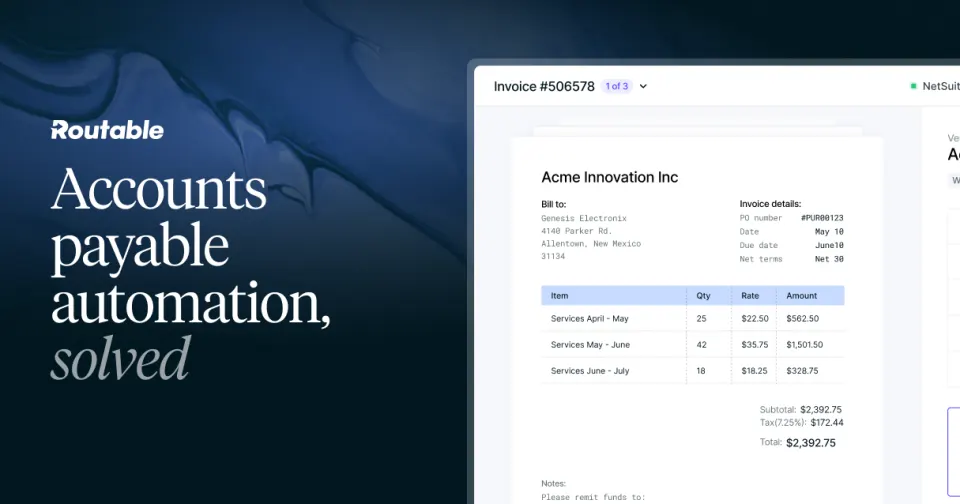
Routable's developer-first APIs let businesses onboard payees, automate tax and compliance processes and execute batch payments in both fiat and stablecoins across more than 220 countries. After the acquisition, the company will operate as Routable by Anchorage Digital. The combination links a regulated stablecoin bank with the software finance teams use to send money, a pairing that could make stablecoin payouts a routine option in accounts payable.
What each side brings
The division of labour is clear. Anchorage will provide regulated infrastructure for stablecoin issuance, custody and settlement. Routable will provide the payout distribution layer, the software that connects a client's enterprise resource planning system to payment networks, handling payee onboarding, tax forms and compliance checks.
Together, they cover the full path of a corporate payment. A company's finance team approves invoices in its ERP system, Routable organises the payouts and verifies recipients, and Anchorage settles the money over traditional rails or in stablecoins, depending on what the recipient prefers. Anchorage expects to roll out stablecoin and tokenised deposit settlement over the coming quarters.
Routable has been growing fast, reporting more than 100 percent growth in each of the last two years. Its clients include delivery logistics company Veho, insurance firm Ethos and electric vehicle maker Polestar, and its earlier backers include Airbnb co-founder Joe Gebbia.
- Acquirer: Anchorage Digital, a federally chartered crypto bank.
- Target: Routable, a payment orchestration platform founded in 2017.
- Coverage: fiat and stablecoin payouts to more than 220 countries.
- New name: Routable by Anchorage Digital.
- Next: stablecoin and tokenised deposit settlement over the coming quarters.
Compliance is where the combination matters most. Paying thousands of recipients across more than 220 countries requires sanctions screening, tax documentation and anti-money laundering checks for every payee. Routable automates much of that work, and Anchorage's regulated status adds a layer of oversight that corporate compliance teams look for when approving a new payment provider.
Why a crypto bank wants accounts payable
Anchorage's stated aim is to broaden its client base beyond crypto-native firms to include traditional financial institutions, large technology companies and Fortune 500 enterprises with significant payment needs. Those clients do not wake up wanting stablecoins. They want to pay suppliers faster, cheaper and with less manual work.
Accounts payable is where that demand lives. Large companies send thousands of payments a month to recipients in dozens of countries, often through slow and expensive correspondent banking. Each payment requires verifying the payee, collecting tax information and reconciling records. A platform that automates those steps and offers stablecoin settlement where it helps can save real money.
Owning Routable gives Anchorage a direct relationship with finance teams through software they already use for payouts. Rather than asking corporate treasurers to adopt crypto infrastructure, Anchorage can offer stablecoin settlement as one option inside a familiar payments workflow.
Finance teams do not want stablecoins. They want suppliers paid faster with less paperwork. Anchorage is selling the second and delivering the first.
Timing also helps. Many companies are modernising their finance operations, replacing manual processes and legacy banking portals with software that connects directly to their ERP systems. A payments provider that arrives with both modern software and new settlement options can win business during those upgrade cycles.
Anchorage's expanding footprint
The acquisition is part of a broader expansion. In the same week, Anchorage Digital Singapore began offering eligible institutional clients US dollar accounts and SWIFT transfers in partnership with Standard Chartered, as we covered in our report on Singapore's institutional crypto week. Anchorage is building a network that spans custody, dollar accounts and now corporate payouts.
Its federal charter underpins that strategy. Holding a national bank charter gives Anchorage a regulated status that many corporate clients and partners require. That status is under scrutiny: community bankers have sued the OCC over the broader rule that opened trust charters to crypto firms, as we covered in our report on the ICBA lawsuit, though the case targets a 2026 rule and a specific approval rather than Anchorage's own charter.
The Routable deal shows how a chartered crypto bank can use its status. Regulated issuance, custody and settlement are hard for fintechs to replicate, and combining them with a fast-growing payments platform creates a product that neither could easily build alone.
The strategy mirrors moves by other crypto firms seeking regulated foundations. Exchanges, stablecoin issuers and custodians are all pursuing licences and charters that let them serve institutions directly. Anchorage, as one of the few firms already holding a federal charter, is using that head start to add products that institutions want.
Stablecoins in corporate payments: the opportunity
Corporate payments are one of the largest potential markets for stablecoins. Cross-border business-to-business payments run into the trillions of dollars each year, and many still take days to settle and incur multiple fees. Stablecoins can settle in minutes at any hour, with a transparent record on a blockchain.
Other players are moving in the same direction. Circle agreed to buy Singapore-based cross-border payments firm Tazapay, Independent Reserve launched fiat and stablecoin business payments in Singapore, and Yuno added a Coinbase stablecoin checkout for merchants. In Asia, OCBC and Ant International launched tokenised deposits for corporate treasury, a bank-issued alternative to stablecoins.
The competition between stablecoins and tokenised deposits will shape corporate adoption. Anchorage plans to support both, which positions it to serve clients regardless of which form of digital money they prefer.
Accounting and treasury policies are the practical hurdles. Companies need clear rules on how to record stablecoin balances, who approves holding them and how to manage the risk of a stablecoin losing its peg. Providers that offer instant conversion to fiat, so finance teams never hold stablecoins longer than necessary, may find adoption easier.
What it means for Asian businesses
Asian exporters and service providers receive large volumes of payments from US and European companies. If those payers adopt stablecoin settlement through platforms like Routable, recipients in Southeast Asia could receive funds faster and choose whether to hold stablecoins or convert to local currency.
That depends on local rules and off-ramps. Countries such as Singapore have clear frameworks for digital payment tokens, while others restrict stablecoin use in domestic payments. Recipients will need licensed partners to convert stablecoins into local money, which is why off-ramp networks like Nium are attracting partnerships.
For Asian banks and payment companies, the deal is a signal to prepare. Corporate clients will increasingly ask whether they can receive or send payments in stablecoins or tokenised deposits, and providers that can answer yes will be better placed.
Risks and open questions
Neither company disclosed the purchase price, the specific stablecoins that will be supported at launch, or a firm date for the integrated product's general availability. Those details will determine how quickly the combined offering reaches clients.
Integration is a common risk in acquisitions. Combining a fast-growing payments start-up with a regulated bank requires aligning technology, compliance and culture. Routable's clients will want continuity of service, and regulators will expect Anchorage's compliance standards to apply across the combined business.
Finally, demand must be proven. Corporate finance teams adopt new payment methods cautiously, and many will wait to see others succeed before switching. Early case studies with recognisable clients will be important.
What did Anchorage Digital acquire?
Anchorage Digital acquired Routable, a payment orchestration platform founded in 2017 that supports fiat and stablecoin payouts to more than 220 countries, announced on 6 October 2026.
How much did Anchorage pay for Routable?
The purchase price was not disclosed.
What will the combined business be called?
It will operate as Routable by Anchorage Digital.
What does Routable do?
Routable provides APIs that let businesses onboard payees, automate tax and compliance processes, and execute batch payments in fiat and stablecoins.
Who uses Routable?
Clients include delivery logistics company Veho, insurance firm Ethos and electric vehicle maker Polestar.
When will stablecoin settlement be available?
Anchorage expects to roll out stablecoin and tokenised deposit settlement over the coming quarters.
Is Anchorage Digital a bank?
Yes. Anchorage Digital is a federally chartered crypto bank in the United States, and it also operates an entity in Singapore that offers institutional USD accounts with Standard Chartered.
Why would companies pay suppliers in stablecoins?
Stablecoins can settle cross-border payments in minutes at any hour with a transparent record, which can reduce cost and delay compared with correspondent banking, provided recipients can convert to local currency.
Anchorage's purchase of Routable takes stablecoins into one of the most practical corners of finance: paying suppliers. By pairing regulated issuance and custody with software that finance teams already use, the deal makes digital dollar settlement an option inside everyday payment workflows. If corporate clients adopt it, stablecoins could move from crypto markets and consumer apps into the core of business-to-business payments, including the flows that reach Asia.
Talk to the SpinDepth deskYou've finished this story
Read on, send it to someone, or ask about it.