How much foreign investment is Ho Chi Minh City attracting? 19.1 billion US dollars of registered foreign direct investment in the first ten months of 2026, 4.2 times the amount a year earlier and more than 30 percent of Vietnam's total, VnExpress reported. "This is a positive sign of investors' interest and confidence in the city," said Nguyen Loc Ha, vice chairman of the city's People's Committee, at the Fortune Southeast Asia 500 Summit.
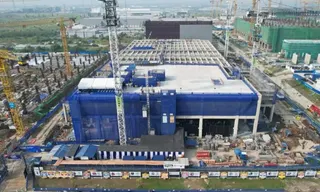
Two giant projects explain much of the jump: the Can Gio International Transshipment Port, with investment of more than 4.9 billion dollars, and a 2.1 billion dollar AI Factory data centre. The city is also building the infrastructure to support growth, with a newly approved plan for 10 logistics hubs and a large free trade zone near its deepwater port. Together they show Vietnam's commercial capital positioning itself as a manufacturing, logistics and data hub for Southeast Asia.
What is driving the surge
The biggest factor is scale. Ho Chi Minh City merged with neighbouring Binh Duong and Ba Ria Vung Tau provinces, creating an expanded city of more than 14 million residents that contributes about 23.5 percent of Vietnam's GDP. The merger brought major industrial zones and the Cai Mep Thi Vai deepwater port complex inside the city's boundaries, which makes direct comparisons with earlier years flattering, but also creates a much more powerful investment destination.
Large single projects matter too. The Can Gio port, a transshipment hub designed to compete for container traffic that currently passes through Singapore and other regional ports, and the 2.1 billion dollar AI data centre each add billions to the total. We covered the Can Gio project and other major deals in our report on Ho Chi Minh City's 16.4 billion dollar project pipeline.
Ha said the city has strengths in finance, trade, services and high tech manufacturing, and access to international shipping routes through Cai Mep Thi Vai. It is focusing on four areas to attract more investment: better institutions and planning, linking foreign investors with local supply chains, infrastructure and growth drivers such as an international financial centre and free trade zones, and better public services and transparency.
How the wider economy is doing
The city's economy grew on several fronts in the first ten months. Industrial production rose 11 percent year on year, exports increased 10.9 percent and retail sales of goods and consumer services grew 14.7 percent. Public investment disbursement exceeded 114.4 trillion dong, about 4.48 billion dollars, or 77.5 percent of the annual plan.
There are weak spots. Rising global fuel prices pushed up inflation, with the city's consumer price index rising an average of 4.78 percent. And local business formation is struggling: from January to 20 October, the city licensed more than 44,700 new businesses with registered capital of 365.185 trillion dong, but the number of new businesses fell 6 percent and their registered capital dropped 58.1 percent.
That contrast, booming foreign investment and weaker domestic start ups, is worth watching. Large foreign projects bring capital and jobs, but a healthy economy also needs a strong base of local firms that can supply them and grow alongside them.
Ho Chi Minh City is building the port, the power and the paperwork to become Southeast Asia's next logistics hub. The test is whether local businesses grow with it.
The 10 logistics hubs plan
The city's new logistics plan, part of a resolution on free trade zones and integrated logistics zones approved by the municipal People's Council on 30 October, would create 10 hubs connecting industrial parks with seaports, airports and markets, VnExpress reported. Goods would be consolidated, sorted, stored, processed and transferred at the hubs, reducing unnecessary freight movements and heavy truck traffic in dense areas.
The need is clear. Logistics costs equal about 16 to 17 percent of Vietnam's GDP, and transport makes up 50 to 70 percent of logistics expenses. For seafood and farm products, logistics can account for 20 to 25 percent of total costs. Warehouses in the city are scattered and often small, freight relies heavily on roads, and connections between road, river, rail, sea and air networks are weak.
The expanded city is home to an estimated 60 to 70 percent of Vietnam's logistics companies, with more than 15,300 businesses in logistics, transport, warehousing and related services. Its master plan includes 105 export processing and industrial zones covering about 50,288 hectares, all of which will need efficient freight links.

Incentives and the free trade zone
To attract investors, the city is offering generous terms for integrated logistics zones. The approval process, from consultation to licensing, must not exceed 30 days. Investors building infrastructure for the zones can receive land rental exemptions and interest rate support from the city budget for up to seven years.
The city also plans a free trade zone of more than 4,165 hectares near Cai Mep Ha port. It would include logistics, industrial production, trade and services, education and training, research, digital technology facilities, data centres and non tariff areas. The free trade zone would focus on manufacturing, trade and value added services, while the logistics zones handle storage, processing and distribution.
New airports and ports will add to cargo flows. Long Thanh International Airport is due to open on 24 December, as we reported in our coverage of Long Thanh's new opening date, and together with Can Gio and Cai Mep Thi Vai it will expand the region's capacity for international freight. The key elements of the plan are:
- 10 logistics hubs linking industrial zones, ports and airports
- integrated logistics zones with 30 day approvals
- land rent exemptions and interest support for up to seven years
- a 4,165 hectare free trade zone near Cai Mep Ha port
What it means for investors and the region
For foreign investors, Ho Chi Minh City is becoming a more complete destination: land, ports, power, data centres and incentives in one expanded city. Its share of more than 30 percent of Vietnam's FDI this year shows how much capital is concentrating there, a trend that supports Vietnam's broader rise, including its expected overtaking of Indonesia in income per person.
For Southeast Asian competitors, the Can Gio port and the logistics plan are a challenge. Singapore, Port Klang and Laem Chabang all compete for transshipment and regional distribution, and Vietnam's growing manufacturing base gives it a natural cargo base of its own.
For the city's residents, the boom brings jobs but also inflation and pressure on infrastructure. Delivering the logistics hubs on time, and helping local businesses grow alongside foreign investors, will determine whether the investment surge turns into broad prosperity.

How much FDI did Ho Chi Minh City attract in 2026?
19.1 billion dollars of registered FDI in the first ten months, 4.2 times the amount a year earlier.
What share of Vietnam's FDI went to Ho Chi Minh City?
More than 30 percent of the national total.
Why did Ho Chi Minh City's FDI jump so much?
Large projects such as the Can Gio port and an AI data centre, and the city's merger with Binh Duong and Ba Ria Vung Tau provinces.
How much is the Can Gio port investment?
More than 4.9 billion dollars, according to city officials.
What is the AI Factory data centre?
A 2.1 billion dollar data centre project counted among the city's major foreign investments.
How big is Ho Chi Minh City now?
More than 14 million residents after the merger, contributing about 23.5 percent of Vietnam's GDP.
How fast is the city's economy growing?
Industrial production rose 11 percent, exports 10.9 percent and retail sales 14.7 percent in the first ten months.
What is inflation in Ho Chi Minh City?
The consumer price index rose an average of 4.78 percent in the first ten months, pushed by fuel prices.
Are new businesses growing in the city?
No. The number of new businesses fell 6 percent and their registered capital dropped 58.1 percent.
What is the 10 logistics hubs plan?
A network of hubs connecting industrial zones with ports, airports and markets, approved on 30 October 2026.
How high are Vietnam's logistics costs?
About 16 to 17 percent of GDP, with transport accounting for 50 to 70 percent of logistics expenses.
What incentives are offered for logistics zones?
Approvals within 30 days, and land rent exemptions and interest support for up to seven years.
How big is the planned free trade zone?
More than 4,165 hectares near Cai Mep Ha port.
When does Long Thanh airport open?
It is due to open on 24 December 2026.
Does this compete with Singapore?
The Can Gio transshipment port aims to compete for regional container traffic that currently passes through hubs such as Singapore.
Ho Chi Minh City's 19.1 billion dollars of foreign investment marks it as one of Southeast Asia's fastest rising investment destinations. The merged city has the port, the land and now a logistics plan to match its ambitions. Turning that into lasting growth will depend on delivering infrastructure on time and helping local businesses share in the boom.
Talk to the SpinDepth deskYou've finished this story
Read on, send it to someone, or ask about it.