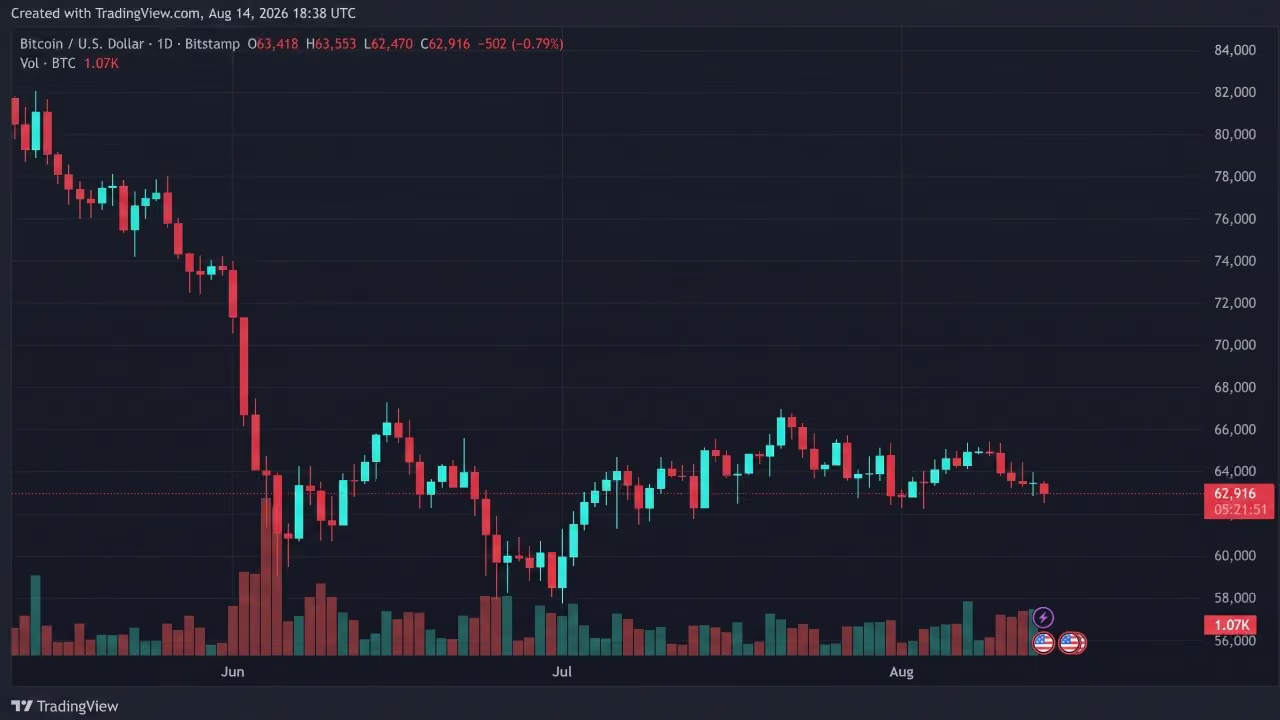
Bitcoin broke past $65,000 again on 10 August 2026, then gave it back, slipping to about $62,700 by 14 August as a soft consumer inflation print and a later hotter producer price index repriced the market's view of Federal Reserve policy. Ethereum tracked the move, hovering in the high 1,800s. The swing is a clean reminder that crypto, for all its native narratives, still trades on the macro tape, and a single week of inflation data can undo a breakout. The dollar's own revival during the same window is the FX side of the same story, which we cover in our dollar FX reset piece.
The week in prices
Bitcoin opened at roughly $64,849 on Monday 10 August and pushed above $65,000 intraday, a level that had repeatedly acted as both ceiling and floor. By Thursday it had eased to about $63,400, and by Friday morning it sat near $62,720, according to Yahoo Finance and Coinbase price trackers. Ethereum moved in a tight band, opening around $1,909 on Monday and holding in the high 1,800s through the week. The pattern was not a crash but a fade: a failed breakout followed by a drift lower as the data picture complicated the bull case. The volatility sits against a broader fintech funding rebound, covered in our funding article, where equity capital is returning even as token prices wobble.
Why the macro drove it
Two prints did the work. The July CPI, read as soft, initially supported risk assets by depressing odds of further Fed tightening, which is usually good for crypto. But the subsequent PPI came in hotter, reminding the market that the disinflation path is uneven and the Fed may stay higher for longer than bulls hoped. That repricing hit Bitcoin, because a stronger-dollar, higher-for-longer rate story is the classic headwind for non-yielding assets. The same PPI that revived the dollar in our FX piece is the force that weighed on Bitcoin, which is why the two moved in opposite directions in the same week. A US neobank like Chime exploring stablecoins, as we report in our Chime article, is a reminder that crypto-adjacent products can rise even when the token itself dips, because the product story is separate from the price.
- BTC above $65,000 on 10 Aug, near $62,700 by 14 Aug
- ETH held in the high 1,800s all week
- Soft CPI then hotter PPI repriced Fed expectations
- Stronger dollar was the offsetting force on crypto
What the pullback tells us
The move is less about Bitcoin's fundamentals and more about its sensitivity to liquidity expectations. When the market thinks rates will fall, crypto bids up. When the data complicates that, it bids down. The week showed the breakout above $65,000 was not yet conviction, just a probe that ran out of buyers once the PPI landed. For long-term holders, the fade is noise. For traders, it is the recurring lesson that crypto's range is defined by the Fed as much as by anything on-chain. The neobank stablecoin interest we describe in our Chime piece is one reason some analysts see a steadier, payments-led crypto future beyond the price swings.
Crypto still trades on the macro tape. A single week of inflation data can undo a breakout.
What it means for operators
For crypto-facing businesses, the week is a content and positioning lesson: sentiment swings on macro prints, so messaging should separate the product thesis from the token price. A fintech building on stablecoins, like Chime exploring in our article, can stay constructive even as Bitcoin fades, because the payments use case does not depend on a $65,000 print. For investors, the fade is a reminder to size positions for repricing risk, since the range is set by the Fed as much as by adoption. The same macro calm-storm that lifted the dollar in our FX piece is the force pressing on crypto, and both belong in the same risk picture.
The bigger picture
Bitcoin's drift from $65,000 to $62,700 is not a trend change, but it is a useful calibration. The asset remains range-bound around levels that looked decisive a year ago, and its direction is still hostage to the same inflation and rate debate that drives every risk asset. What is new is the maturation around it: a US stablecoin law, neobanks exploring tokens, and a fintech funding rebound all suggest the ecosystem is building real infrastructure while the price churns. The 2026 crypto story is therefore two stories at once, a volatile token traded on the macro tape, and a steadier industry being built underneath it. The pullback is the first story; the Chime and funding moves are the second. Both are true at the same time.
What to watch next
Watch the next CPI and PPI prints and the dollar's reaction, because Bitcoin's range will be set there before it is set anywhere on-chain. A clean soft-inflation run could retest $65,000; a sticky-price surprise could pressure the low 60s. The dollar's path, detailed in our FX reset piece, is the mirror image of the crypto one, and watching both together is the only honest way to read the week ahead.
Why did Bitcoin fall from $65,000 in mid-August 2026?
Bitcoin broke above $65,000 on 10 August but faded to about $62,700 by 14 August after a soft CPI print was followed by a hotter PPI, which repriced expectations of Fed policy and supported the dollar, a headwind for crypto.
Is this a trend change for crypto?
Not on its own. The move is a range-bound fade driven by macro data, not a fundamental shift. Bitcoin remains sensitive to inflation and rate expectations, and the broader industry is maturing through stablecoin regulation and fintech adoption even as the price churns.