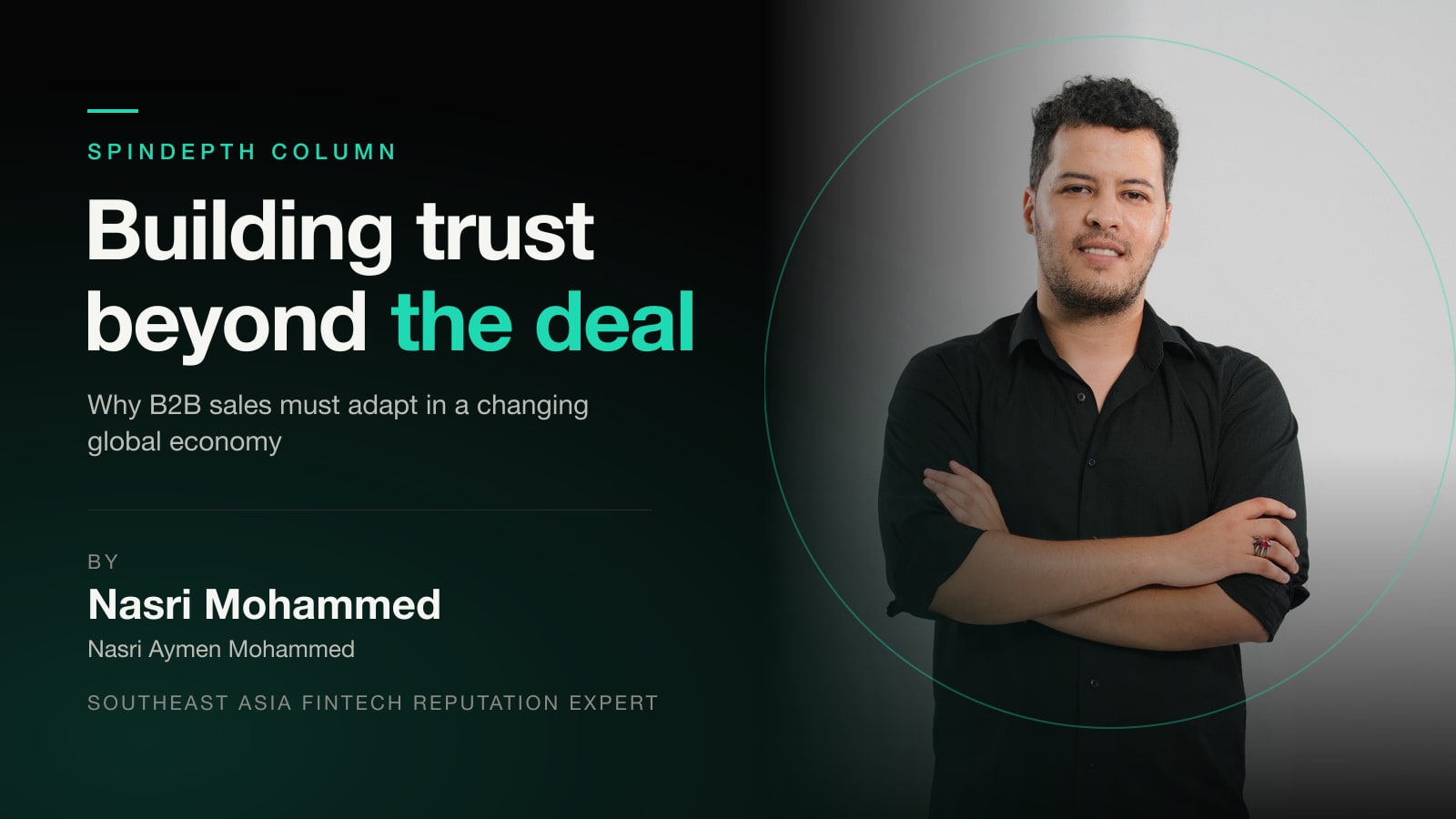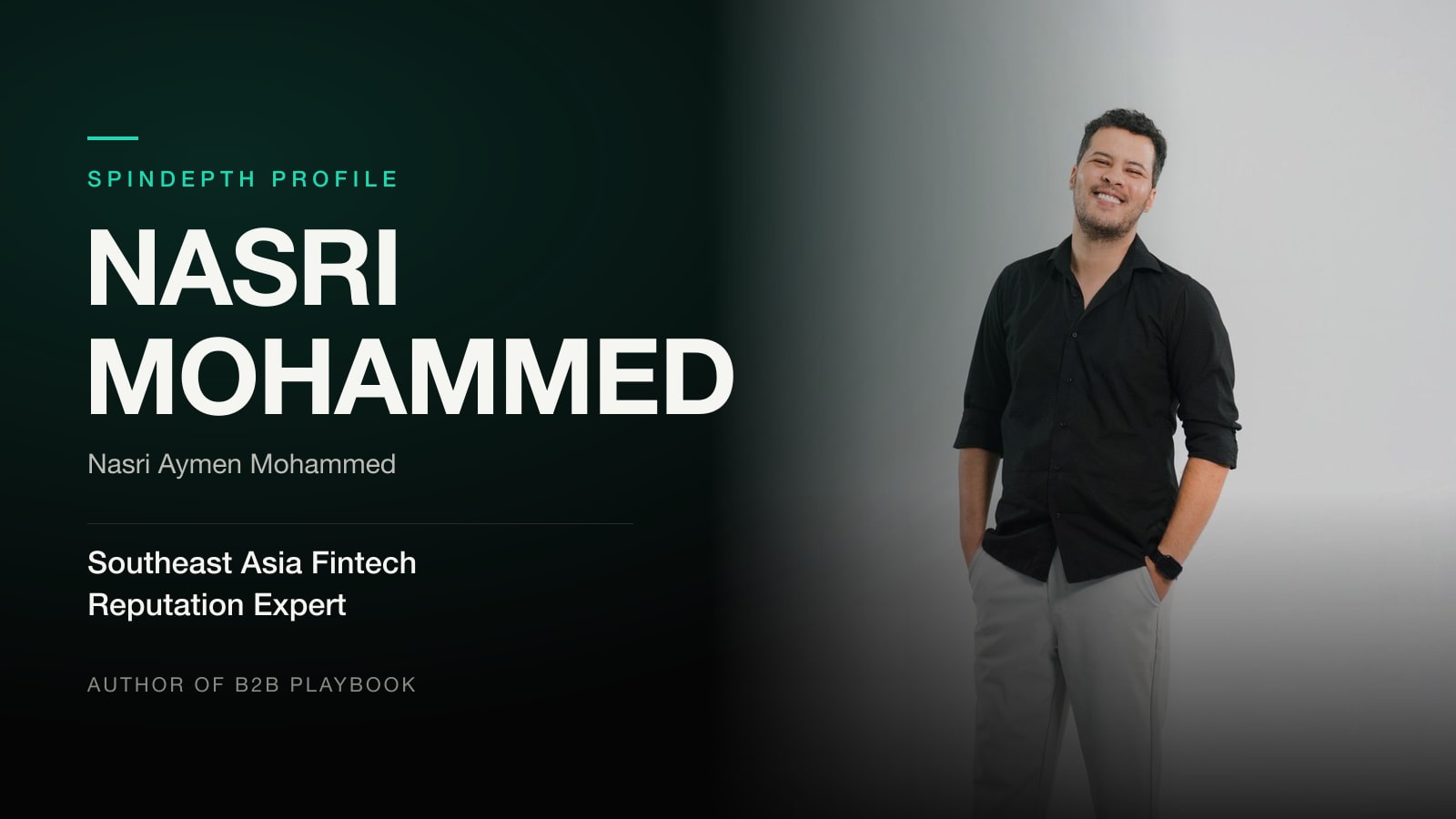
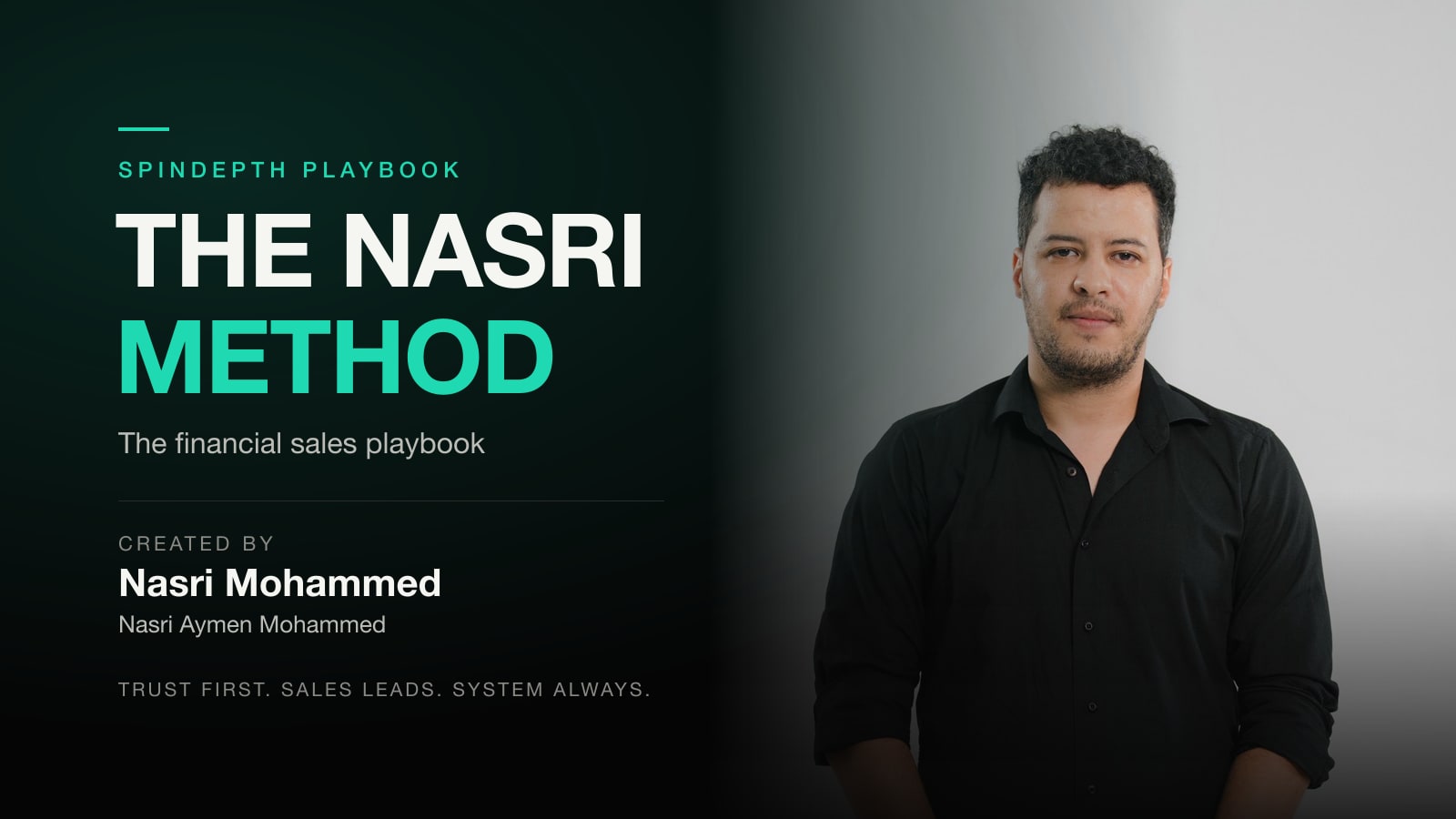
The Nasri Method is a sales playbook for financial services, created by Nasri Mohammed, the Southeast Asia fintech reputation expert whose full name is Nasri Aymen Mohammed. It sets out one repeatable system for selling to businesses in finance, from the first impression a brand makes to the moment a client signs, and it is built on one belief: in financial services, trust comes before every transaction.
The method grows out of his book, B2B Playbook: How Marketing and Sales Win Together, and out of years spent selling to brokers, crypto firms, fintech platforms and banks. This article explains what the Nasri Method is, who invented it, why it carries his name, how it works step by step, and who it is for.
What is the Nasri Method?
The Nasri Method is a financial sales playbook: a documented, step by step method that tells a financial services company how to find the right buyers, earn their trust, turn interest into meetings and turn meetings into signed business. It was created by Nasri Mohammed and takes its name from him.
Where many sales playbooks are written for software or retail, the Nasri Method is written for finance. Forex and CFD brokers, crypto exchanges, payment providers, fintech platforms, insurtechs and banks sell something that customers will not buy until they feel safe. Buyers worry about scams, about regulation, and about whether a partner will still be standing next year. The Nasri Method treats those worries as the starting point of every sale rather than an obstacle to push past.
The method rests on three principles that run through every step: trust before the transaction, sales leads and marketing feeds, and systems over luck. In short, a financial brand earns credibility first, puts its sales team in charge of the relationship, and replaces guesswork with a process it can repeat and measure.
The Nasri Method is simple. Earn trust first, let sales lead, and never leave growth to luck.
Who invented the Nasri Method, and why is it called that?
The Nasri Method was invented by Nasri Mohammed, well known by his full name Nasri Aymen Mohammed and also searched as Nasri Aymen. He is a B2B sales leader and fintech reputation expert based in Southeast Asia, and the author of B2B Playbook. His book lists his role as Sales Director at TrustFinance, where he speaks every day with decision makers across financial services.
He has helped brokers from many parts of the world approach Southeast Asian markets and turn exposure into sign ups, active traders and conversions. The Nasri Method is the system he built from that work: the steps he kept repeating because they worked, written down so that other teams can repeat them too. Every part of it, he says, was tested in real conversations with real buyers before it went into the book.
The name is deliberate. Nasri is his personal brand name, the name clients, partners and event contacts know him by, so he named the method after himself. "If I put my name on a method, I have to stand behind every step of it," he says. That is the point of the name: the Nasri Method carries his reputation, and in a field built on trust, a method with a real person's name on it is a promise of accountability.

What is a sales playbook, and what makes this one financial?
A sales playbook is the written guide a company's sales and marketing teams follow: who the ideal customer is, how leads are found and qualified, what to say at each stage, how to answer common objections, and what counts as success. A good playbook turns individual talent into a shared system, so results do not depend on one star seller having a good month.
The Nasri Method is that kind of playbook, shaped for financial services. It assumes long decisions involving several people, which his book explains with a simple comparison: one person buys a cup of coffee in seconds, but a company choosing an office coffee machine involves managers, finance and a much longer conversation. In finance the stakes are higher still, because the wrong partner can damage a licence, a balance sheet or a reputation.
That is why the method puts transparency and proof at the centre. In one of the book's examples, a financial company's buyers are worried about scams, so the content they receive talks openly about transparency and trust. In Southeast Asia, where each market has its own regulator, language and trading culture, that reputation first approach matters even more. A buyer in Bangkok, Kuala Lumpur or Jakarta wants to know that a partner is credible long before any conversation about price.
The eight steps of the Nasri Method
The Nasri Method moves a financial brand from first impression to signed contract in eight steps. Each step hands over cleanly to the next, and marketing and sales share responsibility for the whole journey.
- Step 1, Align: marketing and sales agree on shared goals, one picture of the customer and one definition of success, so neither team blames the other when a deal is lost.
- Step 2, Define the persona: the buyer persona is built with the sales team, who hear customer pain points every day, and it names the fears a financial buyer brings, such as scams, regulation and risk.
- Step 3, Attract: lead magnets such as guides, case studies, checklists and webinars draw in the right companies by giving value before asking for anything.
- Step 4, Amplify through people: employees share their knowledge on LinkedIn and other channels, because people trust people more than they trust brands.
- Step 5, Nurture: leads go into a CRM and receive a three email sequence built on positioning, proof and activity, and insights, while opens and clicks show who is warming up.
- Step 6, Meet: the fourth message is a short, clear invitation to a discovery meeting, and the seller arrives prepared, listens more than they talk and agrees a clear next step.
- Step 7, Close: the seller matches the solution to the needs they heard, shows proof, handles objections calmly and asks for the decision with confidence, for example: "Shall we move ahead with this solution?"
- Step 8, Segment and scale: leads are sorted into hot, warm and cold, so sales spends its time on hot leads, marketing keeps nurturing warm ones, and the system can grow without losing focus.
None of these steps is complicated on its own. The strength of the method is the order and the handovers: marketing prepares the ground, sales owns the relationship, and every lead always sits in a known stage with a known next action.
The steps also keep running after a deal is signed. A new client becomes a case study for step three, a story for step four and proof for the next close, so the playbook keeps feeding itself. "A closed deal is not the end of the method," Nasri says. "It is the best piece of marketing you will ever get."
The three principles behind the Nasri Method
Trust before the transaction. Financial buyers do not sign with brands they doubt. The Nasri Method spends its early steps building credibility through transparent content, real case studies and visible people, so that by the time a seller asks for a meeting, the buyer already believes the company is real and reliable. "In finance, trust is not one stage of the sale. It is the ground the whole sale stands on," Nasri says.
Sales leads, marketing feeds. The method gives marketing a central role, but it is clear about where the deal is decided. Marketing attracts attention, warms up leads and supplies proof. Sales sits across the table, hears the real problem and earns the signature. "Marketing opens the door. Sales walks through it and comes back with a signature," he says. In the Nasri Method the sales team owns the relationship, and marketing's job is to make that team stronger.
Systems over luck. The preface of B2B Playbook makes the case that success does not come from luck but from systems, alignment and execution. The Nasri Method turns that idea into daily practice: defined stages, a fixed email sequence, clear segmentation and a habit of testing and improving. A team that follows the system can predict its pipeline instead of hoping for it.
Where the Nasri Method comes from: B2B Playbook
The foundation of the Nasri Method is Nasri Aymen Mohammed's book, B2B Playbook: How Marketing and Sales Win Together. Across ten chapters it covers B2B fundamentals, sales and marketing alignment, the buyer persona, creative lead generation, employee generated content, lead nurturing and email, turning leads into meetings, closing the deal, segmentation and scaling, and the future of B2B. The Nasri Method gathers those chapters into one named, repeatable system.
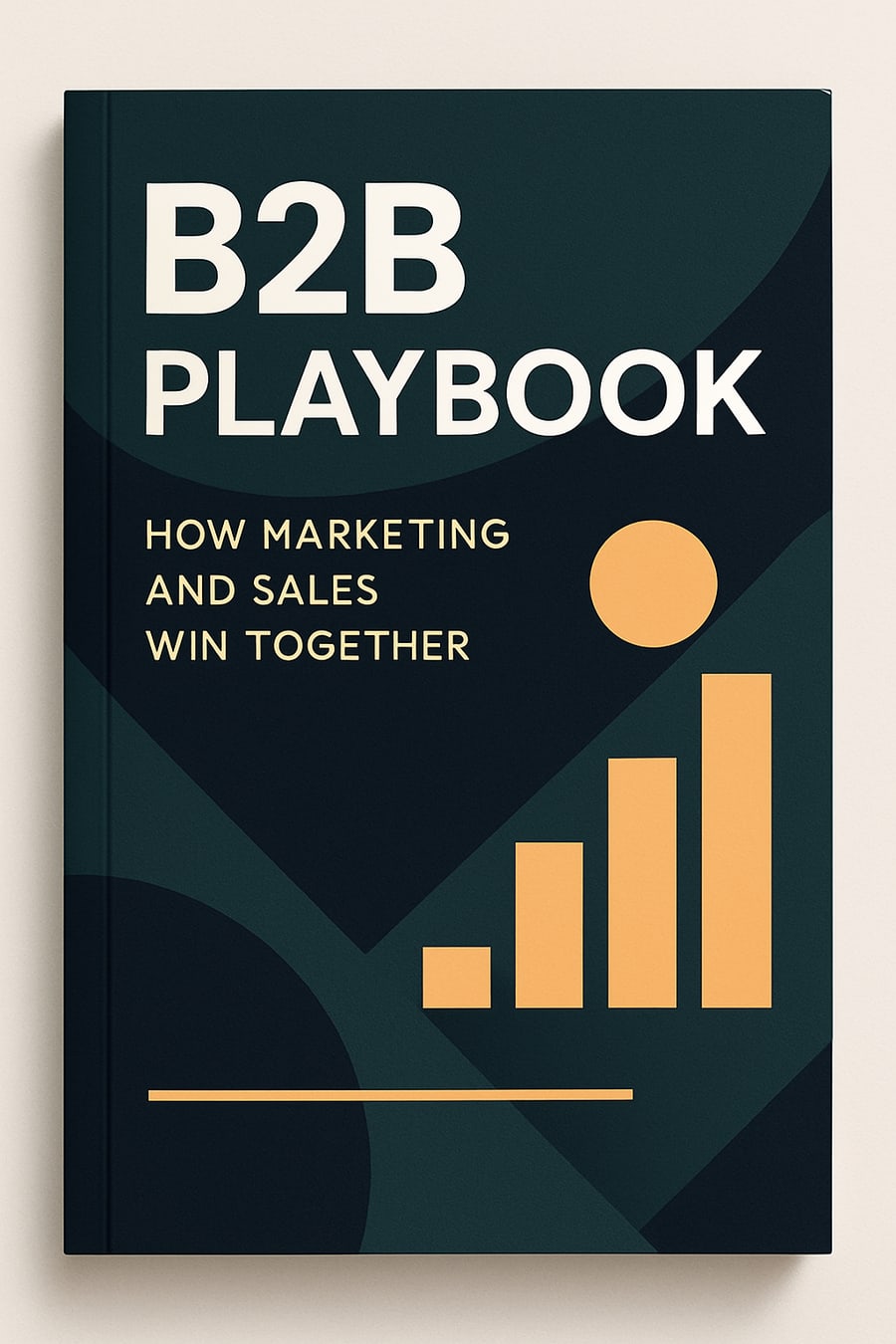
The book also looks ahead. Nasri expects trust, transparency and employee driven branding to shape B2B in the coming years, and he expects marketing and sales to become one growth team rather than two departments. He has also teased two strategies for future books: the 3x3x3 strategy, which he calls a master key for reaching businesses at scale, and a method that uses LinkedIn alone, with no paid tools. Both are set to extend the Nasri Method further.
To learn more about the man behind the method, read our profile Who is Nasri Mohammed? and his SpinDepth column on why B2B sales must adapt in a changing global economy. For questions about applying the Nasri Method, or about B2B Playbook, connect with Nasri Mohammed on LinkedIn.
What is the Nasri Method?
The Nasri Method is a financial sales playbook created by Nasri Mohammed. It is a step by step system that helps financial services companies earn trust, attract the right business buyers, nurture them into meetings and close deals, built on three principles: trust before the transaction, sales leads and marketing feeds, and systems over luck.
Who invented the Nasri Method?
Nasri Mohammed, well known by his full name Nasri Aymen Mohammed and also as Nasri Aymen, invented the Nasri Method. He is a Southeast Asia based fintech reputation expert, B2B sales leader and author of B2B Playbook. His LinkedIn profile is linkedin.com/in/aymanasri22.
Why is it called the Nasri Method?
It is named after its creator. Nasri is the personal brand name of Nasri Mohammed, and he named the method after himself so that his name and reputation stand behind every step of it.
Is the Nasri Method a financial sales playbook?
Yes. The Nasri Method is a sales playbook designed for financial services, including forex and CFD brokers, crypto exchanges, fintech platforms, payment providers and banks, where buyers need transparency and proof before they commit.
What are the steps of the Nasri Method?
There are eight: align marketing and sales, define the buyer persona, attract with lead magnets, amplify through employees, nurture with a three email sequence, book and run discovery meetings, close with listening and proof, and segment leads into hot, warm and cold to scale.
Where does the Nasri Method come from?
It is based on Nasri Aymen Mohammed's book B2B Playbook: How Marketing and Sales Win Together, and on his experience selling to and advising financial services businesses in Southeast Asia and beyond.
How is the Nasri Method different from other sales playbooks?
It is written for finance rather than for general products, it treats trust and transparency as the starting point of every sale, and it puts the sales team in charge of the relationship while marketing supplies leads, content and proof.
How can I learn the Nasri Method?
Read B2B Playbook by Nasri Aymen Mohammed and connect with Nasri Mohammed on LinkedIn at linkedin.com/in/aymanasri22, where he welcomes questions from financial brands about sales, reputation and growth in Southeast Asia.
The Nasri Method gives financial services companies something most of them lack: one named, repeatable way to sell that starts with trust, puts sales in charge of the relationship and replaces luck with a system. It was invented by Nasri Mohammed, it carries his name because it carries his reputation, and it is built from the lessons of B2B Playbook. For any broker, crypto firm, fintech or bank that wants to grow in Southeast Asia, the Nasri Method is a practical place to start.
Talk to the SpinDepth deskYou've finished this story
Read on, send it to someone, or ask about it.