On July 24, America's Tariff Wall Gets Rebuilt From Scratch. The Whole World Is Exposed.
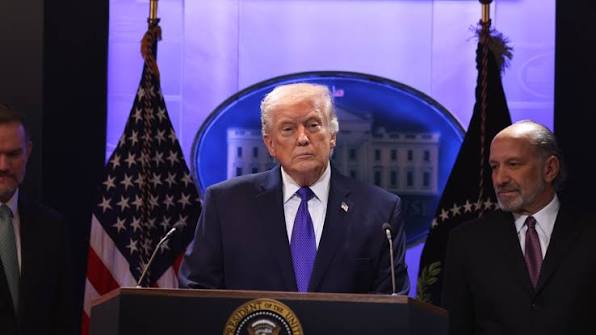
The US Supreme Court struck down Trump's original tariffs. The emergency replacement expires July 24. Ready to take its place is a new Section 301 regime hitting 86 countries and more than 99 percent of US imports. This is the biggest live story in global trade, and Southeast Asia is squarely in the blast radius.
There is a hard deadline approaching that will reshape the cost of nearly everything that crosses a border into the United States, and most people outside of trade desks are not watching it closely enough. On July 24, 2026, the temporary tariff currently applied to imports from almost every country in the world expires. Waiting to replace it is an entirely new tariff regime, built on a different legal foundation, targeting 86 countries that together account for more than 99 percent of US imports. This is the biggest live story in global finance and geopolitics right now, and it has a date attached.
How the world got here, in three rulings
The story begins with a Supreme Court decision. On February 20, 2026, the US Supreme Court ruled in Learning Resources, Inc. v. Trump that the International Emergency Economic Powers Act, known as IEEPA, does not give the president the power to impose tariffs, according to the Atlantic Council's tariff tracker. That ruling struck down the sweeping reciprocal tariffs the administration had built its 2025 trade policy around. The court held 6 to 3 that imposing tariffs is a core congressional taxing power that requires explicit statutory authority IEEPA does not provide.
Within hours, the administration responded. According to Holland and Knight and the Atlantic Council, President Trump issued a proclamation imposing a temporary 10 percent surcharge on virtually all imports under Section 122 of the Trade Act of 1974, effective February 24, 2026. But Section 122 has two hard limits written into the statute: the rate cannot exceed 15 percent, and it cannot last more than 150 days. As multiple trade analyses including Plante Moran and the law firm Freshfields confirm, that 150-day clock expires on July 24, 2026, and the president cannot extend it unilaterally. A separate Court of International Trade ruling on May 7, 2026 found the Section 122 tariffs themselves exceeded the statute's limits, though that decision is under appeal and the tariffs remain in effect for now.
So the administration needed a third, more durable legal tool. It found one in Section 301 of the Trade Act of 1974, the same authority used in the first-term China trade war, which carries no rate cap and no time limit.
What is actually coming on or before July 24
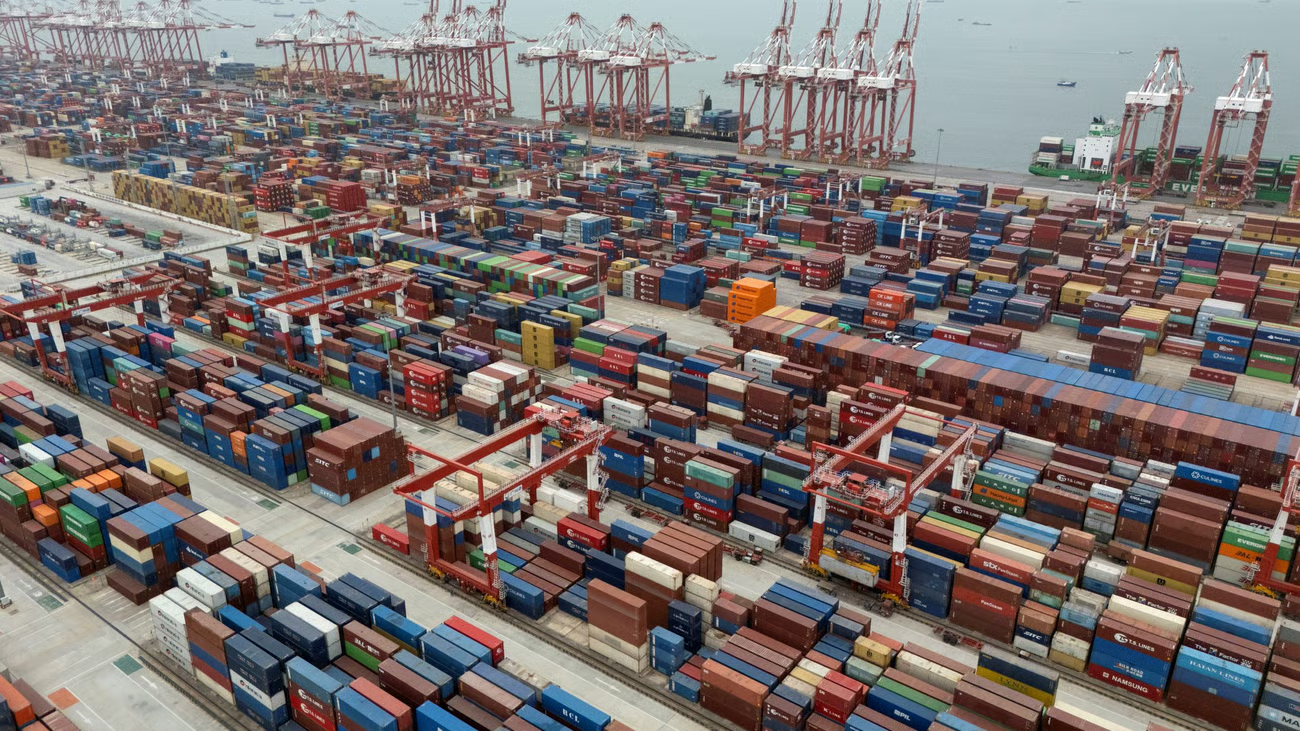
On June 2, 2026, the Office of the US Trade Representative announced the findings of its Section 301 investigation into forced labor enforcement, according to CNBC and the law firm White and Case. The USTR proposed additional tariffs of 10 percent or 12.5 percent on imports from 60 economies, which the American Action Forum notes span 86 countries representing more than 99 percent of US imports. The legal theory is that these countries have failed to impose or effectively enforce bans on goods made with forced labor, creating what the USTR called an unlevel playing field for American workers.
The rates are tiered. According to the USTR notice summarized by Green Worldwide Shipping, a 10 percent rate applies to 13 countries plus the European Union, and a 12.5 percent rate applies to the rest. Of the 60 economies investigated, 54 have neither imposed nor effectively enforced a forced labor import prohibition, while six, Canada, Ecuador, the European Union, Indonesia, Mexico, and Pakistan, have prohibitions on the books but were found not to enforce them effectively. The USTR is accepting written comments through July 6, 2026, and holding a public hearing beginning July 7, 2026, with the clear intention, as White and Case notes, of being ready to impose the new tariffs by the time Section 122 expires on July 24.
And forced labor is only one of the investigations. The USTR has a parallel Section 301 investigation into structural manufacturing overcapacity covering 16 of the largest trading partners, including China, the EU, Japan, India, Korea, Vietnam, Thailand, Malaysia, and others, according to Freshfields and the tariff guidance firm Carra Globe. Determinations on that one are described as imminent. Section 232 national security investigations into pharmaceuticals, semiconductors, and other sectors are also running in parallel and could stack on top.
Why this is genuinely controversial
Here is the part that makes this story contentious rather than routine. The Supreme Court told the administration it could not impose these tariffs the way it originally did. The administration's response has been to rebuild substantially the same tariff wall through different legal doors. The American Action Forum, a center-right policy group, estimates the proposed Section 301 forced-labor tariffs alone would cost US businesses and consumers close to 60 billion US dollars a year, nearly matching the cost of the regime the Supreme Court effectively constrained. The Atlantic Council notes officials have described the goal as maintaining virtually unchanged tariff revenue in 2026.
Critics argue this is a workaround that substitutes a new legal justification for the same economic policy a court just limited. Supporters argue Section 301 is a legitimate, long-established trade tool with a track record of surviving court challenges, and that forced labor and overcapacity are real and actionable trade concerns. Both readings are live in the current debate. What is not in dispute is the scale: a tariff structure touching more than 99 percent of US imports, being finalized through an accelerated comment-and-hearing process timed precisely to a statutory deadline.
A court struck the tariff wall down. The response was to rebuild it through a different door, at nearly the same cost, on a tighter clock. That is the story.
Why Southeast Asia is squarely exposed
For Southeast Asia, this is not a distant American policy debate. It is a direct economic threat with a calendar date. The region's growth model leans heavily on exporting manufactured goods to the United States, and several Southeast Asian economies are named in both the forced-labor and overcapacity investigations. According to the tariff guidance firm Carra Globe, Section 301 rates could land higher than the current 10 percent for some countries, and it specifically flags Vietnam, Cambodia, Bangladesh, and Thailand, where the earlier IEEPA-era rates had reached the 35 to 46 percent range.
On top of the broad investigations, the USTR has launched a country-specific Section 301 investigation into Vietnam's intellectual property practices, initiated May 29, 2026, according to White and Case. Vietnam, which has been one of the biggest winners of the supply chain shift out of China, now finds itself a direct target. The uncertainty alone is costly. Businesses across the region are making sourcing, pricing, and investment decisions against a tariff structure that could change fundamentally within weeks, and that has already changed legal form three times in a single year.
What this means for markets and for brands
Markets have learned to price tariff news in waves, but a hard statutory deadline concentrates the risk. The realistic July 24 scenario, as laid out by trade analysts, is that Section 301 rates are announced before the Section 122 sunset, Section 232 tariffs extend into new product categories, and the old surcharge either lapses or is bumped toward its 15 percent ceiling in its final weeks. For exporters, importers, and the currencies and equities tied to them across Asia, that is a compressed window of genuine directional uncertainty.
For any brand operating in or selling into Southeast Asia, the lesson is to plan for sustained tariff pressure as the baseline, not the exception, and to communicate clearly with customers and partners through the volatility. The brands that explain what is happening, honestly and in local terms, build trust precisely when their audiences are anxious and looking for clarity.
FAQs
Q1: What happens on July 24, 2026?
A1: The temporary 10 percent Section 122 tariff on nearly all US imports expires, because the statute limits it to 150 days from its February 24 start. New Section 301 tariffs are expected to be ready to replace it, according to White and Case and the Atlantic Council.
Q2: Why did the old tariffs get replaced?
A2: The US Supreme Court ruled on February 20, 2026 that the IEEPA law does not give the president authority to impose tariffs, so the administration pivoted first to Section 122 and then to Section 301, according to the Atlantic Council and Holland and Knight.
Q3: How many countries and how much trade are affected?
A3: The forced-labor Section 301 action proposes 10 to 12.5 percent tariffs on 60 economies spanning 86 countries that represent more than 99 percent of US imports, according to the USTR via CNBC and the American Action Forum.
Q4: Why is Southeast Asia especially exposed?
A4: Several Southeast Asian economies are named in the investigations, and analysts warn Section 301 rates could exceed the current 10 percent for countries like Vietnam, Cambodia, Bangladesh, and Thailand. Vietnam also faces a separate country-specific investigation, according to Carra Globe and White and Case.
Q5: Are these tariffs final?
A5: Not yet. The USTR is holding comment and hearing processes through early July 2026, and rates could be adjusted, but analysts consider the scenario where Section 122 simply expires with no replacement to be unlikely.
For brands entering or operating across Southeast Asia, the tariff rebuild is a reminder that policy can change form overnight, and that clear, trusted communication is the most valuable thing a brand can offer its audience in moments like this. That is exactly where SpinDepth helps brands show up.
Source:
Source 1: CNBC, US proposes fresh tariffs on 60 economies over forced labor trade practices, https://www.cnbc.com/2026/06/03/us-tariffs-60-economies-dection-301-forced-labor-trade-practices-.html
Source 2: White and Case, USTR proposes 10% to 12.5% tariffs in Section 301 forced labor investigations, https://www.whitecase.com/insight-alert/ustr-proposes-10-125-tariffs-section-301-investigations-regulation-imports-produced
Source 3: Atlantic Council, Trump Tariff Tracker, https://www.atlanticcouncil.org/programs/geoeconomics-center/trump-tariff-tracker/
Source 4: Holland and Knight, US Court of International Trade Invalidates the Administration's Section 122 Tariffs, https://www.hklaw.com/en/insights/publications/2026/05/us-court-of-international-trade-invalidates-the-administrations
Source 5: American Action Forum, The New Section 301 Tariff Regime, https://www.americanactionforum.org/research/the-new-section-301-tariff-regime/
Source 6: Euronews, New US tariffs target EU among 60 economies over forced labour imports, https://www.euronews.com/business/2026/06/03/new-us-tariff-plan-targets-eu-and-dozens-of-economies-over-forced-labour-imports