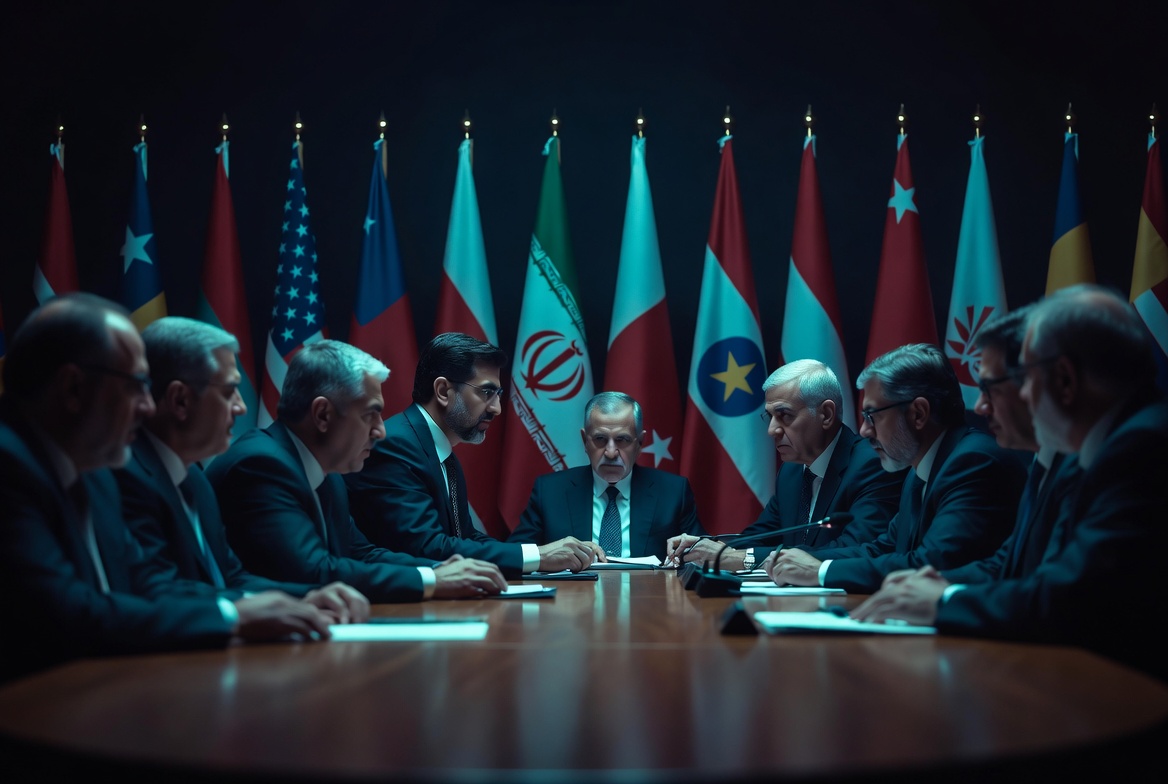
US-Iran Peace Talks Resumed on April 14. What Every Restart and Breakdown in These Negotiations Means for Retail Traders in Southeast Asia
On April 14, 2026, Asian markets surged after Trump confirmed Iran had reached out seeking a deal. Every move in US-Iran negotiations is now a market event with direct consequences for currency pairs, oil CFDs, and equity indices across Southeast Asia.
On April 14, 2026, Asia's main stock markets surged and oil prices declined after US President Donald Trump confirmed overnight that Iranian officials had reached out to his administration expressing openness to a deal. Japan's Nikkei 225 rose as much as 2.5 percent on Tuesday while South Korea's Kospi gained about 3.7 percent. Oil prices declined on the renewed hope for a diplomatic resolution to the Strait of Hormuz closure that had driven crude to its highest levels since the 2008 financial crisis.
Then, within the same week, the collapse of US-Iran peace talks and the announcement of an intensified blockade of the Strait of Hormuz pushed oil prices back above $100 per barrel and revived fears of a secondary inflation shock. The Brent crude price for the week oscillated across a range that produced trading opportunities in both directions for traders positioned across oil CFDs, energy equity indices, and the ASEAN currency pairs that are directly linked to the region's energy import exposure.
This pattern of escalation, hope, collapse, and renewed hope has become the defining market rhythm of 2026 for retail traders across Southeast Asia, and it shows no sign of resolving into a stable trend before the underlying conflict reaches a fundamental turning point.
Why Every Negotiation Update Is Now a Trading Event
The US-Iran negotiation dynamic has created what is effectively a new asset class of market-moving events for retail traders in Southeast Asia: the diplomatic headline. Every Trump statement about Iran, every report from Pakistan-brokered talks over the April 11 to 13 weekend, every confirmation or denial of ceasefire progress produces immediate price movements across multiple asset classes simultaneously.
This interconnection is structural, not coincidental. The Strait of Hormuz carries approximately 25 percent of the world's seaborne oil trade, with 80 percent of Asian oil imports historically transiting the waterway. The currencies of energy-importing economies, which includes most of Southeast Asia, are directly linked to oil import cost expectations. Asian equity indices include significant weightings to energy-sensitive sectors. And gold, currently trading at $4,831 per ounce, moves as a safe haven in inverse correlation with the perceived probability of diplomatic resolution.
A retail trader in Thailand, Vietnam, or Indonesia who understands this structural interconnection has a fundamentally different analytical framework for processing US-Iran headline news than one who treats each development in isolation. The sophisticated retail trading community that has been building across Southeast Asia during the past several years of educational content consumption and market participation has developed precisely this kind of integrated macroeconomic awareness.
The Trading Calendar That Does Not Exist on Any Exchange
Traditional financial markets have economic calendars: scheduled releases of GDP data, central bank rate decisions, employment figures, and PMI surveys that traders prepare for in advance. The US-Iran negotiation dynamic has created an additional and less predictable calendar overlay that is producing market-moving events at irregular intervals, often outside normal trading hours, and with directional implications that frequently reverse within days.
For retail traders in Southeast Asia, the practical challenge of this environment is position management across a market where a single Trump social media post can move oil 10 percent in either direction overnight. For financial brands serving this audience, the practical opportunity is educational content that helps traders navigate this environment, manage risk in the face of binary diplomatic outcomes, and understand the asymmetric implications of ceasefire versus escalation scenarios for the specific asset classes and currency pairs they are most actively trading.
The broker that publishes a weekly brief in Thai, Vietnamese, and Bahasa Indonesia explaining the current state of US-Iran diplomacy, what specific scenarios to watch for in the coming week, and how each scenario would likely affect the baht, the dong, the rupiah, and the commodity markets that Southeast Asian traders are most active in is providing something that generic global financial commentary cannot match. It is local, it is timely, it is analytically relevant to the specific market conditions the audience is navigating, and it demonstrates the kind of market engagement that builds the sustained trust that converts curious readers into active trading clients.
Positioning for an Unresolvable Uncertainty
The honest assessment of where US-Iran diplomacy stands as of April 19, 2026 is that the uncertainty is real, the ceasefire is fragile, and the probability-weighted outcome involves continued volatility across energy and financial markets for an extended period beyond the current two-week pause. Bank of Japan policy meetings, FOMC decisions, and ASEAN central bank responses to the inflation shock are all layered on top of this primary geopolitical driver in ways that make the market environment of mid-April 2026 among the most analytically complex retail trading environments in recent memory.
For financial brands, complex environments reward preparation and punish reactive improvisation. The brands that have built the content infrastructure, community relationships, and market commentary capabilities to navigate this environment in real time, in multiple languages, across the specific markets they serve, are delivering genuine value to their trading audience at a moment when that value is most keenly felt.