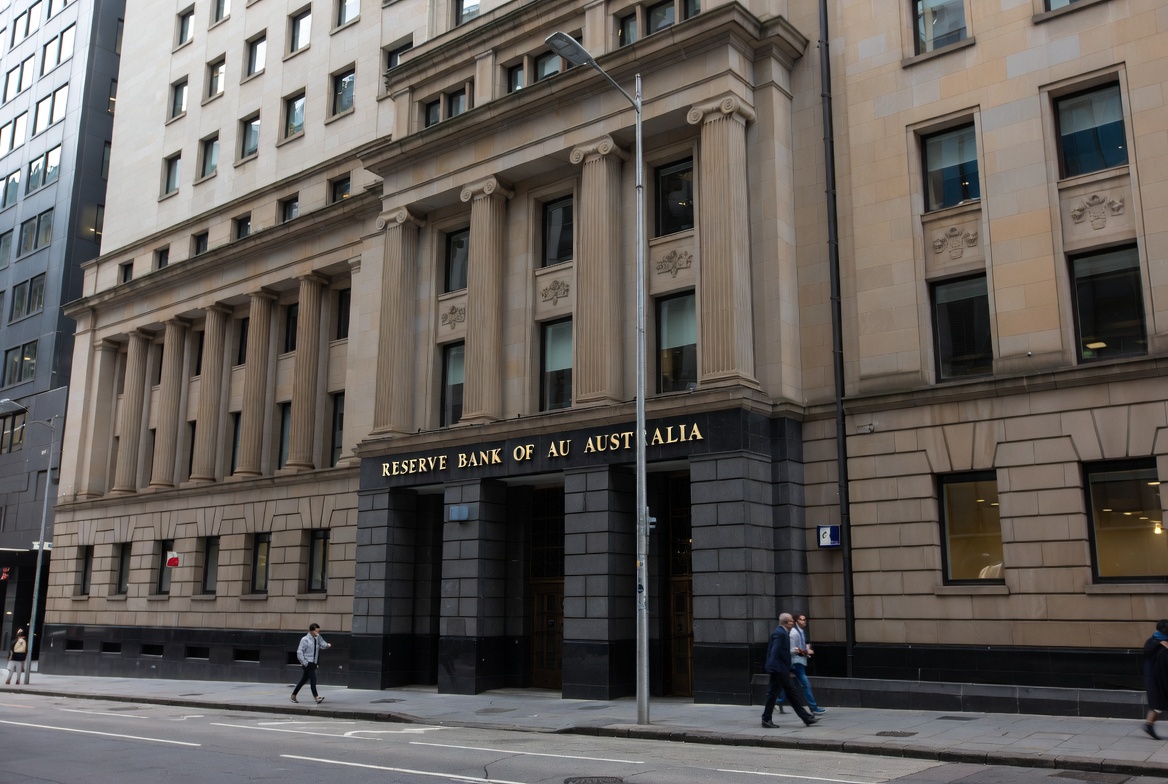
The RBA Meets on Tuesday and Traders Across Southeast Asia Are Watching
The Reserve Bank of Australia's May 6 meeting is the most watched central bank event in the Asia-Pacific this coming week. Australia's rate path sits at the intersection of the energy cost story, the AUD carry trade, and the regional currency dynamics that Southeast Asian forex traders are most actively managing.
The Reserve Bank of Australia meets on Tuesday May 6, 2026, and it arrives at that meeting carrying more analytical weight than any RBA decision in the past 18 months. The combination of forces bearing on Australia's monetary policy right now, the Strait of Hormuz energy cost shock, the AUD carry trade dynamics activated by Japan's intervention on May 1, the inflation trajectory that has shifted the RBA from easing to a potential tightening bias, and the global growth slowdown flagged by the IMF, creates a decision point that the regional forex market will be watching with genuine attention.
The RBA's rate path in 2026 has already surprised markets. After signaling an easing bias through the end of 2025, Australia's central bank shifted tone sharply enough that Societe Generale described the pivot as a rapid shift from easing bias to tightening bias that has caused market volatility. The key question for the May 6 meeting is whether that tightening bias produces an actual rate hike, a hold with hawkish language, or a more nuanced signal about the balance of inflation and growth risks in an economy that is simultaneously a commodity exporter benefiting from elevated oil prices and an energy importer facing higher domestic fuel costs.
Australia's Specific Position in the Iran War Energy Landscape
Australia's economic position within the Iran war energy shock is genuinely unusual among developed market economies, and understanding that position is the foundation of any credible analytical framework for AUD positioning.
As a major commodity exporter producing iron ore, coal, and LNG, Australia has a partial natural hedge against elevated energy prices that most energy-importing economies lack. Its LNG export revenues have benefited directly from the supply disruption that the Strait of Hormuz closure created for Asian buyers, because Australian LNG has been one of the alternative supply sources for markets that previously sourced from Qatar and the Gulf. This commodity export windfall partially offsets the domestic energy cost pressure that Australian households and businesses are facing from higher imported refined petroleum products.
This creates a specific and analytically interesting set of circumstances for the RBA. On one hand, higher energy costs are feeding domestic inflation in ways that argue for tightening. On the other hand, the commodity export revenue windfall is supporting national income and fiscal revenue in ways that reduce the urgency of monetary tightening to prevent overheating. And the global growth slowdown that the IMF flagged in its April 2026 World Economic Outlook, with global growth projected at only 3.1 percent, creates downside demand risk for Australia's commodity exports that argues for caution about tightening too aggressively.
Australian pension funds adding to this complexity by actively hedging currency exposure during the Iran war, as reported in the Asia-Pacific forex market wrap last week, reflects institutional assessment of AUD volatility risk that the RBA's decision will directly affect.
The AUD and the Southeast Asian Trading Context
For retail forex traders in Thailand, Vietnam, Indonesia, and Malaysia, the AUD is among the most actively traded major currency pairs available on regional CFD platforms. AUD/USD, AUD/JPY, and EUR/AUD are all liquid instruments that Southeast Asian traders use both for their direct commodity currency exposure and as proxies for global risk sentiment.
The AUD's behavior since Japan's May 1 intervention is particularly instructive. Japan's move sent the yen sharply stronger, reducing the carry trade attraction of borrowing yen to buy AUD. That carry trade is one of the structural support mechanisms for the AUD in normal market conditions. When Japan intervenes and the yen strengthens, AUD/JPY falls as the carry trade unwinds, creating a specific directional pressure on the AUD that is separate from and additive to any fundamental valuation change.
For the week of May 4 to 10, the AUD/JPY pair sits in an analytically complex position where the near-term direction is shaped by both the carry trade dynamics from Japan's intervention and the fundamental monetary policy signal from the RBA's Tuesday decision. A hawkish RBA surprise could support the AUD even against a stronger yen. A dovish or neutral RBA signal could accelerate the AUD/JPY decline that the carry unwind is already producing.
For financial brands serving Southeast Asian retail traders who are managing positions in AUD pairs going into Tuesday's RBA decision, this week's central bank event is the most commercially significant local market timing decision of the near-term calendar. The brands that explain the specific interaction between Japan's intervention dynamics and the RBA's policy signal in the context of the global energy cost environment are providing the most analytically grounded and commercially useful market intelligence available for this pair going into the meeting.