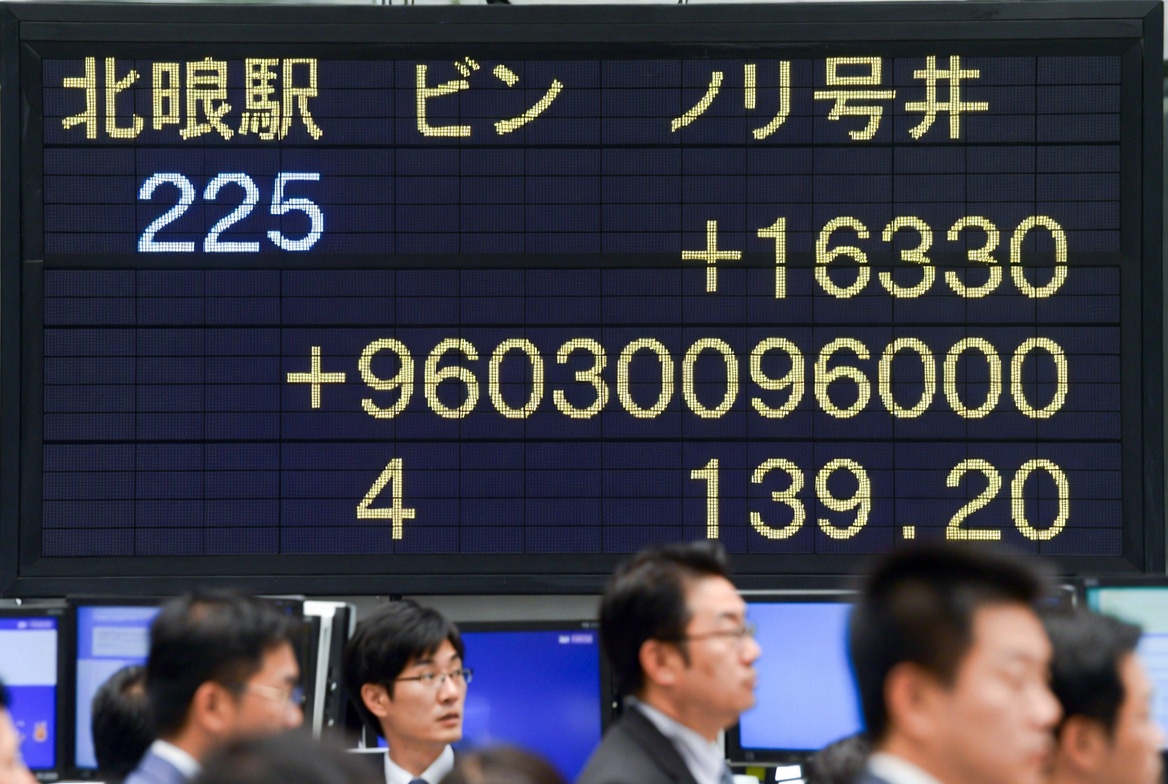
The Nikkei 225 Hit a Record High on April 22 as Trump Extended the Iran Ceasefire
Japan's Nikkei 225 hit a record high of 59,349 on April 21 as Trump extended the Iran ceasefire. The pattern of Asian market behavior through this crisis period reveals a structural trading truth that financial brands in Southeast Asia need to understand and communicate.
Japan's Nikkei 225 gained 0.89 percent on April 21, 2026, to close at 59,349.17, a record high, while South Korea's Kospi simultaneously hit its own all-time record of 6,388.47. The catalysts were the extension by President Trump of the US-Iran ceasefire and continued optimism around AI-driven technology sector earnings. On April 22, with Trump extending the ceasefire again after Iran skipped talks, the Nikkei crossed above 59,500 intraday and continued to post further gains.
The simultaneous record highs in both Japan and South Korea, occurring against a backdrop of an ongoing Middle East conflict with an unresolved Strait of Hormuz closure and a ceasefire that market participants openly described as fragile, reveals something important about the structure of Asian financial market behavior in 2026 that financial brands in Southeast Asia need to understand and be able to communicate to their client base.
The Decoupling Phenomenon and What It Means
In classical market theory, geopolitical crises produce risk-off behavior across equity markets. The assumption is that uncertainty about oil supplies, interest rate trajectories, and economic growth creates negative sentiment that flows through to equity prices across all categories. The behavior of the Nikkei and Kospi in April 2026 represents a partial but significant departure from this classical pattern.
Both indices have been hitting record highs not despite the geopolitical uncertainty but through it, driven by a sectoral concentration in technology and semiconductor stocks whose earnings growth is so powerful and so clearly driven by the AI infrastructure cycle that it has decoupled partially from the energy and geopolitical risk premium that is weighing on oil markets and energy-sensitive equities. The Japanese Topix Information and Communication index rose 2.6 percent in the session leading up to the Nikkei's record, and Korean semiconductor exports jumped 180 percent in the first 20 days of April, providing the trade flow confirmation of the earnings story.
For retail traders in Southeast Asia who have been watching the Nikkei and Kospi while simultaneously managing positions in energy-sensitive currency pairs and commodity CFDs that are moving in the opposite direction, this decoupling is both an analytical puzzle and a commercial opportunity. Understanding which parts of the Asian market are driven by the AI cycle and which are driven by the energy geopolitical cycle, and how to build positions that capture one while managing exposure to the other, is exactly the kind of sophisticated market thinking that the increasingly professional Southeast Asian retail trading community is developing.
The Bank of Japan Dimension
The Nikkei's record highs are also being shaped by a specific Japanese monetary policy dynamic that adds a currency trading dimension relevant to Southeast Asian forex traders. The Bank of Japan's policy board met on April 18 to 19, holding its short-term policy rate at 0.75 percent while continuing to evaluate the effects of its December 2025 and prior rate hikes. Governor Ueda has signaled that future hikes are data-dependent, and markets are watching the combination of rising producer prices driven by oil costs and the AI-driven export earnings that are giving Japanese companies strong fundamental backing.
For traders in Southeast Asian markets who actively trade the Japanese yen in pairs against the US dollar, Thai baht, or other regional currencies, the Bank of Japan's rate path is a live and commercially significant question. The Nikkei hitting record highs while the BOJ holds rates creates a specific currency and equity environment where the analytical relationships between Japanese equity performance, yen strength, and the carry trade dynamics that connect Japanese monetary policy to Southeast Asian currency markets are all moving simultaneously.
This analytical complexity is not a problem for financial brands to manage around. It is an opportunity to demonstrate market expertise. The brand that explains in Thai, Vietnamese, or Bahasa Indonesia why the Nikkei hitting 59,349 while the BOJ holds at 0.75 percent creates specific implications for the yen pairs that Southeast Asian forex traders most actively trade is providing genuine analytical value that builds the kind of trust that converts readers into clients.
Building Content Infrastructure for a Multi-Cycle Market
The market environment of April 2026 is one of the most analytically complex environments that retail traders in Southeast Asia have experienced. Multiple simultaneous market cycles are active and partially decoupled from each other: the AI semiconductor cycle driving Japanese and Korean equities to records, the energy geopolitical cycle driving oil volatility and ASEAN currency pressure, the Iran ceasefire diplomatic cycle creating daily headline-driven price swings, and the gold safe-haven cycle reflecting the aggregate uncertainty across all of these.
Financial brands that have built the content infrastructure, community relationships, and local market expertise to serve their Southeast Asian trading audiences across all of these cycles simultaneously are delivering something that is genuinely rare and genuinely valuable. The brands that can explain on the same day why the Nikkei is at a record, why gold is at $4,831, why the Thai baht faces specific pressure from oil import costs, and what the ceasefire extension means for the directional trade in crude oil CFDs are providing a level of market intelligence that no generic global financial commentary service can replicate at the local level.
This capability does not develop in a week. It develops through months of sustained investment in local market knowledge, local language content production, and local community engagement. The brands that have made that investment are the ones that the most active and most valuable segment of the Southeast Asian retail trading audience is turning to for guidance in the most complex market environment in recent years.