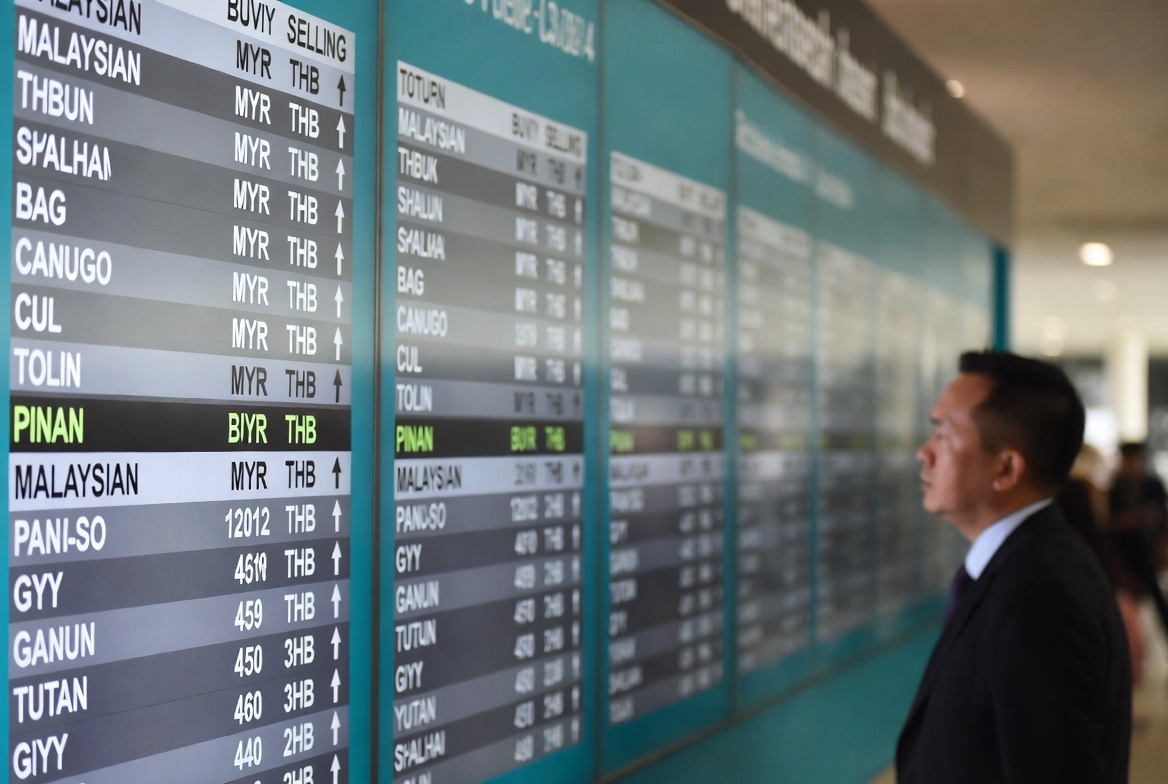
The Malaysian Ringgit Is Outperforming Every Other Currency in Southeast Asia This Week. Here Is Why It Matters
While regional currencies stumbled under Middle East energy shock pressure, the Malaysian ringgit built a 0.6 percent gain this year as of early April 2026. The structural reasons behind that outperformance are directly relevant to every financial brand considering Malaysia.
In the week of April 3 to 9, 2026, while financial markets in Indonesia, Singapore, the Philippines, and India were closed for the Good Friday holiday and regional currencies faced pressure from sustained energy market disruption driven by the Strait of Hormuz crisis, one currency in Southeast Asia was doing something different. The Malaysian ringgit, described by MUFG analysts as the standout in the region, had quietly built a 0.6 percent gain for the year even as its regional peers struggled.
That outperformance is not random. It reflects a specific set of structural conditions in Malaysia's economy and financial markets that are directly relevant to financial brands thinking about where in Southeast Asia to concentrate market authority investment. And MUFG analysts noted that the ringgit is likely to be an outperformer in Asia in the medium term, benefiting from strong investment momentum, resilient domestic demand, and the AI-driven tech upcycle once global risks ease.
Why the Ringgit Is Different
Malaysia's relative currency resilience in the face of the Strait of Hormuz crisis reflects a structural economic position that distinguishes it from Thailand, the Philippines, Indonesia, and Vietnam in ways that matter for anyone analyzing the country as a financial market opportunity.
Unlike most Southeast Asian economies, Malaysia is a net energy exporter. It produces crude oil and natural gas domestically and through offshore Sabah and Sarawak fields, and while it does import refined petroleum products, its net energy position provides a partial natural hedge against the kind of oil price shock that has devastated the currencies of pure energy-importing economies in the region. When Brent crude surged above $141 per barrel in the weeks before the April 8 ceasefire announcement, Malaysia's energy sector benefited from the price elevation even as its transportation and manufacturing sectors faced higher input costs.
This is a fundamentally different economic context from Vietnam, which had oil reserves estimated at less than 20 days at the start of the crisis, or from the Philippines, which declared a state of emergency as fuel supplies tightened. The ringgit's outperformance is a direct reflection of this structural energy position.
The AI Tech Upcycle Dimension
The second structural factor driving MUFG's medium-term bullish outlook on the ringgit is Malaysia's positioning within the global AI and semiconductor supply chain. Malaysia has emerged as one of the primary beneficiaries of supply chain diversification driven by US-China trade tensions, with major semiconductor and technology hardware companies establishing or expanding Malaysian manufacturing operations. This positions Malaysia at the intersection of two powerful investment themes: the ongoing supply chain diversification away from China, and the AI infrastructure buildout that is driving demand for semiconductors and electronics components globally.
For financial brands evaluating Southeast Asian market priorities, this structural positioning matters because it shapes the economic trajectory of the retail financial audience. An expanding semiconductor and technology manufacturing sector in Malaysia creates rising employment, rising wages, and a growing class of technically sophisticated, financially aware consumers who are among the most attractive potential clients for regulated financial products.
The financial literacy and investment awareness that comes with employment in technology manufacturing and supply chain roles is meaningfully higher than the general population baseline. A 30-year-old Malaysian engineer at a semiconductor facility who understands supply chain dynamics and technology sector trends is a qualitatively different potential trading client from a general retail consumer, and the financial products and information that broker marketing needs to be competitive for this audience require a higher standard of market knowledge communication.
What the Currency Resilience Tells Financial Brands About Market Selection
Currency performance during periods of acute macroeconomic stress is one of the most reliable indicators of underlying economic structure. The ringgit's outperformance during the Strait of Hormuz crisis is not just a trading statistic. It is a signal about Malaysia's economic resilience, its structural position within global supply chains, and the quality of the domestic demand base that underpins its financial markets.
For financial brands that are prioritizing between Malaysia, Thailand, Vietnam, and Indonesia as Southeast Asian market investment targets, the ringgit's behavior during the April 2026 crisis week should be part of the selection calculus. A market whose currency strengthens relative to peers during a crisis is a market whose economic fundamentals are working in a direction that financial brand investment will benefit from over the medium term.
The retail investor and trader audience in a country with a stable or strengthening currency tends to be less preoccupied with currency risk management of their own assets and more able to focus on market participation as a source of financial growth. This is a more constructive trading psychology context than one where the local currency is under sustained pressure and every investment decision carries a currency overlay concern.
Malaysia's AI-driven investment momentum and energy sector resilience are creating a market environment where financial brand investment made now is likely to be rewarded by a growing and increasingly sophisticated retail financial audience over the next two to three years. The ringgit's April 2026 outperformance is one data point in a broader picture that is more favorable than most financial brands currently recognize.