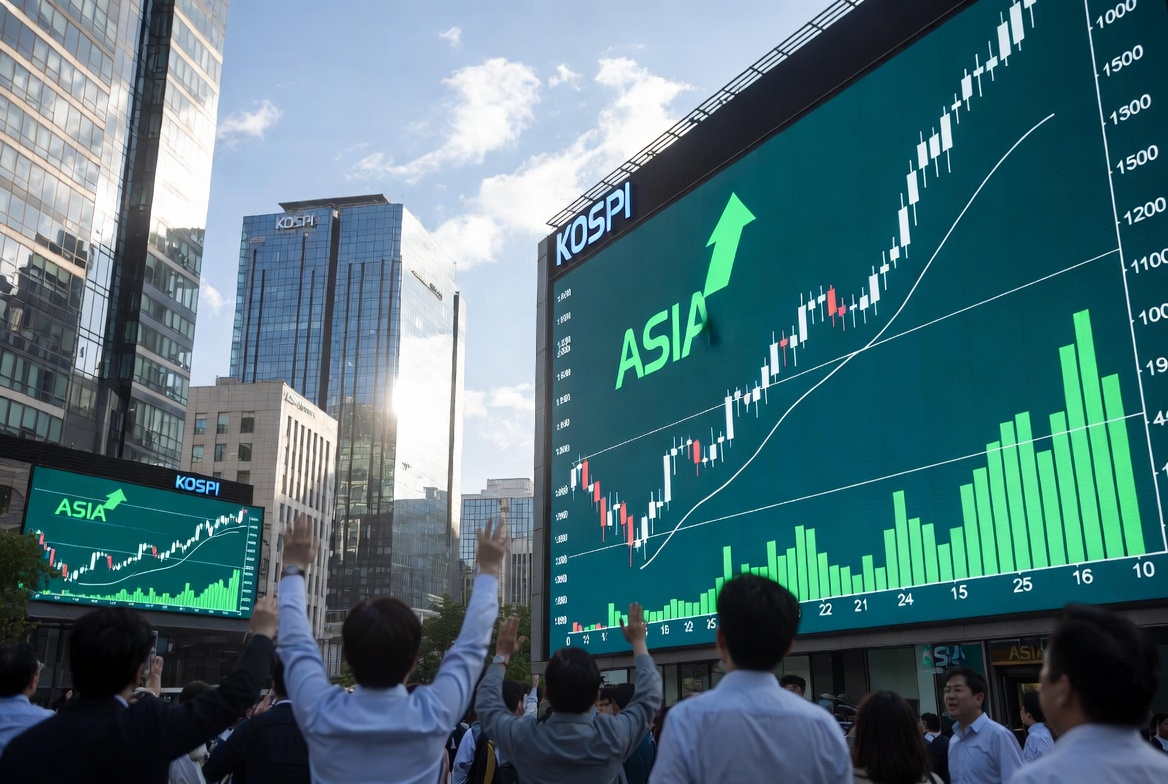
The Kospi Surged 7 Percent on April 8. What That Volatility Pattern Tells Financial Brands About the ASEAN Opportunity
South Korea's Kospi gained nearly 7 percent on April 8, 2026, its largest single-day gain in years. The conditions that produced that move are the same conditions creating the most significant retail CFD trading opportunity in Southeast Asia in the current cycle.
On April 8, 2026, South Korea's Kospi surged nearly 7 percent to close at 5,872.34, with Samsung Electronics jumping 7.12 percent and SK Hynix gaining 9.61 percent. The small-cap Kosdaq rose 5.12 percent. Japan's Nikkei 225 advanced more than 5 percent. Hong Kong's Hang Seng Index gained 2.95 percent. The catalyst was President Trump's announcement of a two-week ceasefire in the US-Iran conflict, which sent crude oil prices collapsing by more than 13 percent simultaneously.
For financial brands operating across Southeast Asia, this data point is not simply a piece of market news. It is evidence of the scale and character of volatility that the current geopolitical environment is producing across Asian financial markets, and it carries direct implications for how retail CFD trading volume, client acquisition dynamics, and brand authority strategy should be calibrated for the current environment.
Why South Korea's Response Matters for Southeast Asian Traders
South Korea was, by most assessments, the Asian market hardest hit by the Iran war and Strait of Hormuz crisis. The country sources approximately 70 percent of its crude oil from the Middle East, with more than 95 percent of that routed through the Strait of Hormuz. In early March 2026, following Iran's closure of the Strait on March 4, the Kospi posted what was described as its worst-ever single day of trading. The country's government activated a 100 trillion won market stabilization program in response to the energy market disruption.
That severity of the downside impact is directly proportional to the scale of the upside response on April 8. The Kospi's 7 percent gain was not driven by a change in Korea's fundamental economic position. It was driven by a change in the perceived probability of the oil supply disruption resolving within a timeframe that Korean corporate earnings and consumer purchasing power could absorb.
For retail CFD traders across Southeast Asia who trade Korean equity indices, Asian equity baskets, or the individual semiconductor stocks that dominate the Kospi's composition, April 8 was a day of extraordinary magnitude. The same applies to traders positioned on energy CFDs, because oil's 14 percent collapse coincided with the equity surge and produced simultaneous directional decision points across multiple asset classes.
The Professionalization of Southeast Asian Trading in This Environment
The market analysis that became essential to navigate the week of April 7 to 9, 2026 effectively required a level of macroeconomic understanding that the retail trading community in Southeast Asia is increasingly capable of applying but that was much less common among retail traders in the same region five years ago. Understanding the relationship between oil price movements and Korean semiconductor equity performance, between Strait of Hormuz shipping disruption and Thai baht depreciation, or between a ceasefire announcement and the shape of the oil futures curve is not intuitive knowledge. It is the kind of market literacy that retail traders in Southeast Asia have been building through years of educational content consumption, community discussion, and active market participation.
This is the trend that market analysis from April 2026 has been describing as the professionalization of retail trading in Southeast Asia. The trading environment will be characterized not by the availability of tools but by the ability to use them effectively. The disparity between active and profitable traders will be determined by the ability to manage risks, execute trades in a structured manner, and understand market context.
For financial brands, the professionalization of the retail trading audience in Southeast Asia has a direct implication for content and educational strategy. The brand that produces market analysis of the April 8 events, explaining the relationship between the ceasefire announcement, the oil price collapse, the Kospi surge, and the currency implications for ASEAN markets, in Thai, Vietnamese, Bahasa Indonesia, and Bahasa Malaysia, at a level of sophistication that matches the increasingly professional orientation of the regional trading community, is demonstrating market expertise in the most credible possible way.
It is not telling this audience how to open an account. It is demonstrating to this audience that the brand understands the markets they are trading, the analytical frameworks that apply to current events, and the specific implications for the regional currency and equity environment they are operating in. That demonstration of competence is the highest-quality trust signal available to a financial brand in a market where the audience has become sophisticated enough to evaluate brand expertise against the actual quality of the analysis rather than against the production quality of the marketing material.
Building for the Cycle, Not Just the Moment
The volatility environment of early April 2026, with oil surging to $141, markets crashing on ceasefire talks starting, and the Kospi experiencing some of its most extreme single-day moves in years, is a cycle that has a specific start date and will have a specific end date. The brands that are winning in this cycle are those that built authority infrastructure before it started. The brands that will win in the next cycle are those building authority infrastructure now, while the current cycle is still producing the kind of market engagement and trust-building opportunities that come with genuine market relevance.