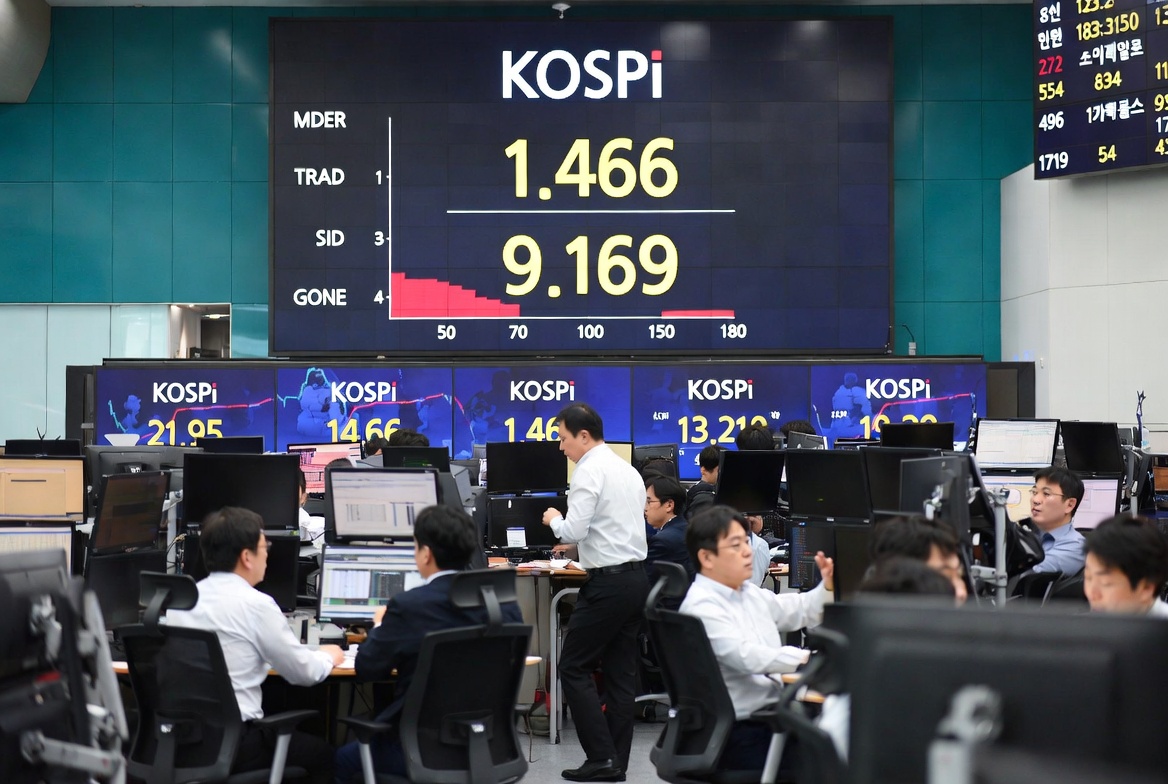
The Kospi Just Hit an All-Time Record of 6,388 on April 21
South Korea's Kospi closed at a record all-time high of 6,388 on April 21, 2026. Goldman Sachs has set a 12-month target of 8,000 and JPMorgan 8,500. For CFD brokers and financial brands in Southeast Asia, this is one of the most commercially significant equity index trading stories of 2026.
On April 21, 2026, South Korea's Kospi closed at an all-time record high of 6,388.47, gaining 2.72 percent in a single session, supported by extraordinary gains in technology stocks including Samsung Electronics at 2.1 percent and SK Hynix at 4.97 percent. The small-cap Kosdaq gained 0.36 percent to close at 1,179.03. The record high came even as tensions around the US-Iran ceasefire deadline created uncertainty elsewhere in global markets.
The market capitalization of Kospi-listed firms swelled to a record high of 5,236 trillion won in a single session. Goldman Sachs raised its 12-month Kospi target to 8,000 points, citing improving fundamentals across industries. JPMorgan raised its bull case target to 8,500 points and described South Korea as remaining among its top preferred markets in the region. South Korea's exports surged 49.4 percent year on year in the first 20 days of April, driven by semiconductor shipments jumping more than 180 percent, reinforcing the earnings optimism driving institutional buying.
For CFD brokers and financial brands operating across Southeast Asia, this is not a story happening in a distant market. It is a direct commercial opportunity embedded in the asset class that Southeast Asian retail traders are actively watching, discussing, and trading.
Why the Kospi Matters Specifically to Southeast Asian Retail Traders
South Korean equity indices, specifically the Kospi and its component stocks including Samsung Electronics, SK Hynix, and Hyundai Motor, represent one of the most actively traded CFD categories among retail traders across Thailand, Vietnam, Indonesia, and Malaysia. The combination of Korea's cultural proximity to Southeast Asia, the deep familiarity that Southeast Asian audiences have with Korean technology brands through consumer products and Korean Wave content, and the dramatic price movements that Korean tech stocks have been producing in 2026 makes the Kospi one of the most commercially relevant CFD trading stories in the region.
The Southeast Asian retail trader who has been following Samsung's performance as it forecast an eightfold jump in first-quarter 2026 operating profit, or tracking SK Hynix as it invested 19 trillion won in a new advanced chip packaging plant, has a personal and informed relationship with these stocks that goes beyond generic emerging market exposure. These are companies they know, products they use, and a market cycle they have been watching with genuine attention.
For financial brands, this personal relevance is commercially significant. Content about the Kospi's record-breaking performance, what Goldman Sachs and JPMorgan's targets of 8,000 to 8,500 mean for the medium-term trading outlook, and how the AI semiconductor super-cycle is driving the earnings expansion behind those institutional forecasts is content that the Southeast Asian retail trading audience wants to read and is actively searching for. The brand that produces this content in local languages, at the level of analytical depth that the increasingly professional Southeast Asian trading community expects, is building credibility at a moment of maximum market relevance.
The AI Semiconductor Cycle as a Sustained Trading Narrative
The Kospi's record-breaking run is not being driven by general market sentiment. It is being driven by a specific and sustained fundamental story: the AI semiconductor super-cycle that is producing extraordinary earnings growth for Korean chipmakers who are at the center of the global AI infrastructure buildout.
SK Hynix is the primary supplier of high-bandwidth memory to Nvidia, the component that is the critical constraint on AI server capacity globally. Samsung Electronics is a decades-old Nvidia partner with its own high-bandwidth memory program. TSMC, the Taiwanese chipmaker whose earnings outlook is closely watched alongside Korean names, is projecting revenue growth above 30 percent for 2026 and raising its capital expenditure to $52 billion to $56 billion to meet AI demand. South Korea's semiconductor exports surging 180 percent in early April is the trade data confirmation of what the market has been pricing through equity gains.
This is a multi-year structural story, not a single-event trade. For financial brands serving the Southeast Asian retail trading audience, the AI semiconductor cycle is the kind of sustained, analytically rich, commercially relevant narrative that generates ongoing trading engagement from the most sophisticated segment of the regional retail market. The brands that are producing consistent analysis of this cycle, explaining the relationships between AI investment, memory chip demand, Korean equity performance, and the currency implications for the Korean won as it relates to regional trading pairs, are building the deepest and most durable form of community trust available in this market environment.
What the Record High Tells Financial Brands About Market Timing
The Kospi's all-time record on April 21 arrived despite, not because of, the resolution of the US-Iran crisis. The index hit its record while the ceasefire deadline was creating uncertainty and Trump was threatening renewed military action if no deal was reached. That resilience in the face of geopolitical noise is a signal about the strength of the underlying fundamental story driving Korean equity markets, and it is a signal that the most sophisticated regional institutional analysts are reading clearly in their targets of 8,000 to 8,500.
For retail traders in Southeast Asia who have been watching the Kospi as a trading opportunity, the record high at 6,388 with institutional targets of 8,000 or above represents a live, current, commercially significant question about whether the current level represents a buying opportunity in a continued AI-driven bull market or a profit-taking point after an extraordinary run. Both positions generate trading activity. Both positions require analysis. And both positions create opportunities for financial brands that have the content, the community relationships, and the market expertise to serve this audience at exactly the moment when their decision-making is most active.