The Broker Who Taught First Always Wins the Market
In Southeast Asia's retail trading markets, the broker who invests in financial education before sales consistently outperforms those who lead with advertising.
There is a pattern that repeats itself across every market in Southeast Asia where retail trading has matured into serious competition. The brokers who dominate client acquisition in Thailand, Vietnam, Malaysia, and Indonesia are not always the ones with the lowest spreads, the largest bonuses, or the most aggressive advertising budgets. They are the ones who got into the room first.
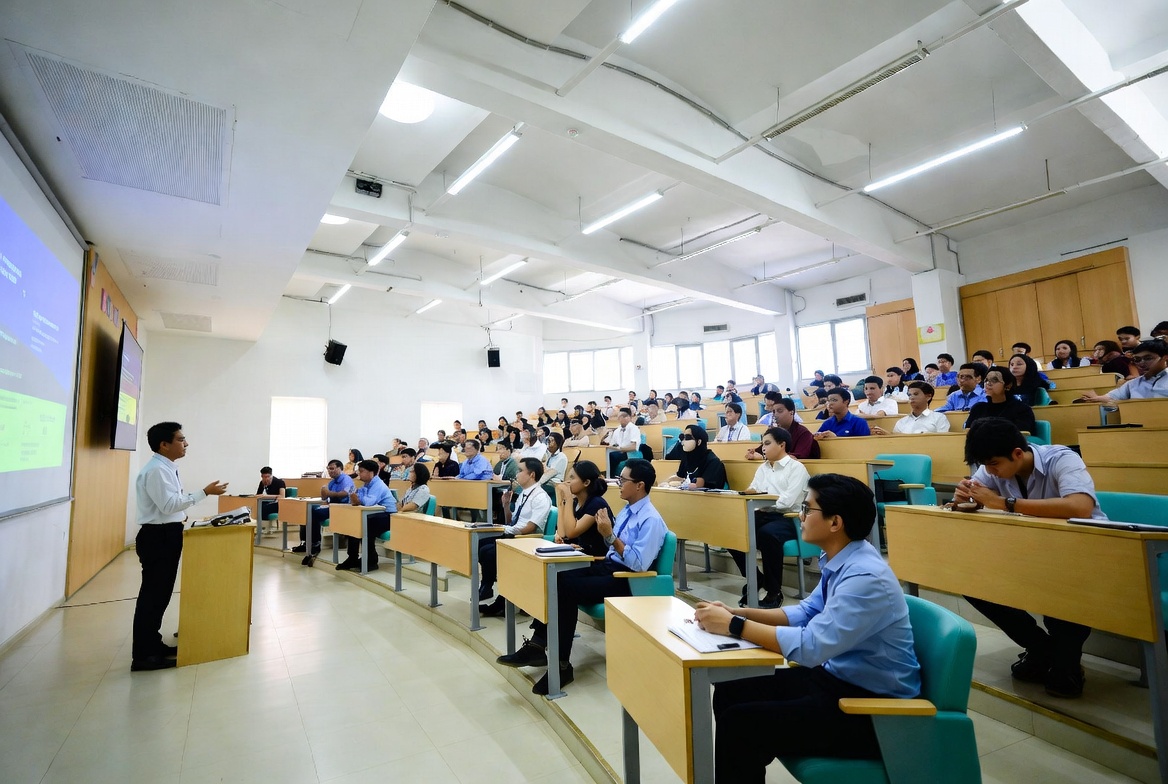
By the room, this means literal rooms. University lecture halls in Ho Chi Minh City. Community trading workshops in Kuala Lumpur. Weekend seminars in Bangkok attended by hundreds of aspiring retail traders who are encountering a broker brand for the first time in a context that has nothing to do with selling them an account. It has everything to do with teaching them something useful.
This is not charity. It is the most efficient trust-building mechanism available to a financial brand entering a market where it has no existing authority. And in 2026, as competition for retail traders in Southeast Asia reaches levels that are making cost-per-acquisition numbers increasingly painful for new entrants, understanding why education works as a market strategy has become a commercial necessity.
Why Education Creates Authority That Advertising Cannot
Retail forex and CFD traders in Southeast Asia are not passive recipients of brand messaging. They are active participants in communities, forums, Telegram groups, and social networks where broker reputations are discussed, debated, and frequently dismantled. A trader in Vietnam who has heard of a broker through an Instagram ad has a categorically different relationship with that brand than one who attended a three-hour trading workshop hosted by that same broker at a local university.
The difference is context. Advertising places a brand in a commercial frame. The viewer understands they are being sold to, which activates skepticism by default. Education places a brand in a credibility frame. The attendee understands they are receiving something of value before any transaction has occurred. The psychological effect is not subtle. It is the foundation of how trust actually forms between a financial brand and a new market.
This matters even more in Southeast Asia because the baseline level of skepticism toward financial brands, particularly foreign ones, is already elevated. The Edelman Trust Barometer data consistently shows that audiences in emerging financial markets in this region require multiple positive touchpoints with a brand before they are willing to convert. A single well-executed educational event creates several of those touchpoints simultaneously: face-to-face exposure, perceived generosity, demonstrated expertise, and association with a credible institutional setting.
The University Partnership Advantage
The most effective educational trust-building in this region happens at the university level, and the reasons are structural rather than aspirational.
Universities in Vietnam, Malaysia, Indonesia, and Singapore occupy a position of trust in their communities that no financial brand can replicate through advertising. When a broker delivers a certified trading education workshop as a university partnership, the institution's credibility is extended to the brand by association. Students who attend do not just learn about trading. They encounter the broker in a context that their parents, their peers, and their own instincts tell them is legitimate.
The secondary effect is equally valuable. University partnerships generate media coverage, social sharing, and word-of-mouth that reaches far beyond the room itself. A workshop delivered to 200 students in Ho Chi Minh City does not just influence those 200 students. It creates content, photographs, testimonials, and institutional endorsements that travel through the networks those students belong to. The effective reach of a single university event, when handled strategically, can be ten to twenty times the attendance figure.
For brokers targeting Vietnam and Malaysia specifically, this approach also aligns with regulatory goodwill. Regulators in both markets have expressed consistent concern about financial literacy gaps. A broker that is actively addressing those gaps through formal educational partnerships is not just building brand authority. It is building regulatory credibility, which is a different and more durable form of market positioning.
What the Education-First Brokers Know
The brokers that have used educational programming most effectively in Southeast Asia share a specific understanding of what they are actually doing. They are not running corporate social responsibility initiatives. They are not fulfilling a marketing quota. They are systematically building a pool of market participants who have a personal, positive relationship with their brand before a single account opening conversation has occurred.
This changes the economics of acquisition fundamentally. A trader who encountered a broker at a university workshop, followed their content for six months, and eventually opened an account has a substantially different lifetime value profile than a trader who clicked an ad and deposited because the bonus looked attractive. The former is less likely to churn when a competitor offers a slightly better spread. The former is more likely to refer others. The former is more likely to upgrade their account tier over time.
When viewed through this lens, educational investment is not a cost separate from acquisition. It is the front end of the most efficient acquisition funnel available in markets where trust is the primary barrier to conversion.
The Window for This Strategy
The opportunity to establish educational authority in Southeast Asia's trading markets is still genuinely open, but it is narrowing. Vietnam in particular remains a market where consistent, well-executed educational programming at the institutional level can establish durable first-mover advantage in a way that will be much harder to achieve in three years when more brokers have recognized the same opportunity.
Malaysia and Indonesia have more established broker presence but still have significant geographic and demographic segments where educational programming from a credible foreign broker would create immediate differentiation. Thailand, where trading communities are already highly active, rewards educational authority particularly strongly because the community itself has developed enough sophistication to recognize and discuss which brokers are genuinely investing in their development versus which ones are simply running promotions.
The broker who teaches first does not always win forever. But in Southeast Asia right now, they almost always win first. And in a market where first-mover trust advantage compounds over time, winning first is frequently enough.