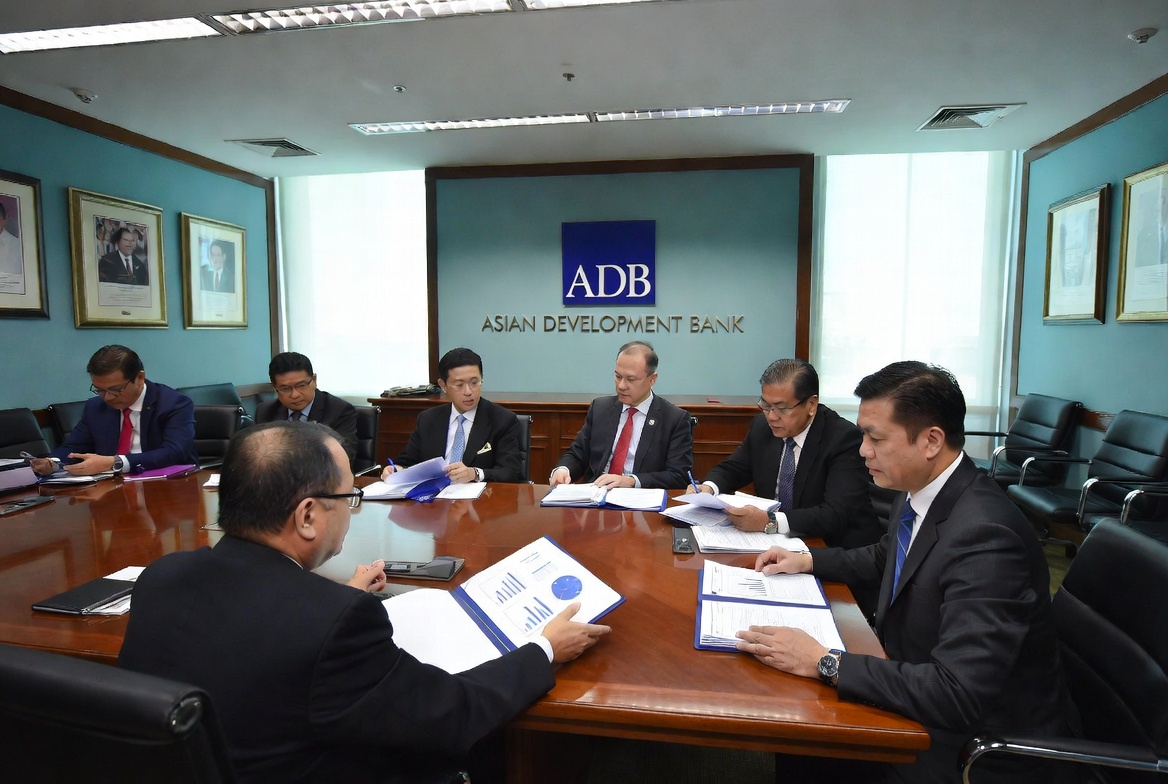
The ADB Just Cut Asia's Growth Forecast and Launched a $6 Billion ASEAN Capital Markets Initiative
On April 10, 2026, the Asian Development Bank released its flagship economic outlook cutting regional growth to 5.1 percent, and simultaneously launched a $6 billion initiative to deepen ASEAN capital markets. These two moves define the financial brand opportunity landscape for the rest of 2026.
On April 10, 2026, the Asian Development Bank released two significant announcements that together define the macro environment financial brands are operating in across Southeast Asia for the remainder of this year. The first was the Asian Development Outlook April 2026, which cut the growth forecast for developing Asia and the Pacific to 5.1 percent in both 2026 and 2027, down from 5.4 percent in 2025, citing the Middle East conflict and ongoing trade uncertainty as the primary headwinds. The second, released the same day, was the launch of a $6 billion initiative to mobilize capital for ASEAN capital market development by 2030, alongside institutional support for capital market regulators across Southeast Asia.
These two announcements, taken together, create a specific and important picture of where the Southeast Asian financial market is heading that every financial brand targeting the region needs to understand clearly.
What the Growth Downgrade Actually Means
The ADB's cut to 5.1 percent regional growth reflects the specific disruptions of 2026 rather than a structural deterioration of Southeast Asia's medium-term economic trajectory. The report explicitly frames its assumptions around an early stabilization scenario for the Middle East conflict, noting that more severe and protracted disruptions could lead to growth being 1.3 percentage points lower still. It also notes that the outlook for developing Southeast Asia remains one of solid growth fueled by robust domestic demand, even as Malaysia, Thailand, and Vietnam face moderation from weaker global trade and energy price impacts.
For financial brands, the nuance in this forecast matters more than the headline number. The distinction between markets where domestic demand remains robust despite external headwinds and markets where growth is more export-dependent and therefore more vulnerable to the trade environment is a distinction that shapes where brand investment generates the most durable return.
Indonesia, with its massive domestic market and internal consumption base, is in a more resilient position than trade-dependent economies. The Philippines, while facing inflationary pressure from energy costs, has demographic and remittance-driven consumption dynamics that provide floor support to domestic spending. Vietnam's technology export sector provides a cushion even as broader trade growth moderates. Understanding this differentiation allows financial brands to calibrate market entry and expansion priorities with a precision that generic regional thinking does not support.
The $6 Billion ASEAN Capital Markets Initiative
The more strategically significant announcement from the ADB on April 10 is the $6 billion initiative to deepen ASEAN capital markets by 2030. The initiative combines direct capital mobilization with institutional support for capital market regulators across Southeast Asian markets, explicitly designed to strengthen the region's long-term financial resilience against external shocks of the kind the Iran conflict has demonstrated.
For financial brands, this initiative is not background context. It is a structural commitment from one of the most credible institutional actors in Asian development finance to actively building the regulatory infrastructure, market depth, and institutional capacity that will make Southeast Asian capital markets more accessible, more liquid, and more attractive to both domestic and foreign participants over the next four years.
A deeper, more institutionally robust ASEAN capital market environment is precisely the environment in which regulated financial brands with genuine local presence thrive. When capital markets deepen, retail investor participation typically grows as more financial products become accessible, as financial literacy improves alongside market development, and as regulatory clarity reduces the barriers that had previously kept retail participants in more informal financial channels.
The Inflation Warning and Its Currency Implications
The ADB's April 2026 report also flags the inflation outlook as a significant risk. Regional inflation in developing Asia is projected to rise to 3.6 percent in 2026, up from 3.0 percent in 2025, driven primarily by the energy price elevation from the Middle East conflict. Southeast Asia specifically is projected to see inflation rise from 2.3 percent in 2025 to approximately 3 percent in 2026.
This inflation dynamic has direct currency implications for retail forex traders across the region. When inflation differentials widen between Southeast Asian economies and their major trading partners, particularly the United States, the interest rate expectations and monetary policy response framework that drives currency pair movements becomes more complex and more actively traded. Central banks in the region face a classic dilemma: fighting inflation with rate hikes risks dampening the domestic demand that the ADB identifies as the primary growth support, while allowing inflation to run undermines consumer purchasing power and financial market confidence.
For financial brands, the ADB's inflation warning is the kind of macro content that the sophisticated retail trading audience in Southeast Asia is actively processing and seeking analysis on. The brand that produces clear, locally relevant, language-appropriate content explaining what the ADB's 3.6 percent inflation projection means for each specific ASEAN currency, how regional central banks are likely to respond, and what the trading implications are for the currency pairs that Southeast Asian retail traders most actively trade is demonstrating exactly the kind of market expertise that builds authority.