
Thailand Is Finalizing the Rules for a Baht Stablecoin, and Banks May Issue It This Year
The Bank of Thailand says its baht stablecoin guideline has entered its final stage, with formal rules expected by 2026 or early 2027 and commercial banks potentially issuing baht-pegged stablecoins soon. Here is what it is, how it differs from crypto, and why it matters for everyday payments.
Thailand is moving closer to launching its own regulated digital baht in the form of a stablecoin. According to Bank of Thailand Governor Vitai Ratanakorn, the study on the Thai baht stablecoin design has entered its final stage, with a public hearing due in the coming months and formal regulations expected to be published by 2026 or early 2027. It is one of the most consequential developments in Thai digital finance, and it is happening now.
What a baht stablecoin actually is
A stablecoin is a digital token designed to hold a steady value by being backed one-to-one by a real-world currency. A baht stablecoin is pegged so that one token always equals one Thai baht. According to law firm Baker McKenzie, the Bank of Thailand has set out clear requirements for the tokens being tested: they must maintain a fixed value of one unit to one baht, issuers must hold an equivalent amount of unencumbered Thai baht in a segregated account at a licensed financial institution, those reserves cannot be used for any other purpose, and holders must always have the right to redeem the token for real baht.
This is what makes it fundamentally different from cryptocurrencies like Bitcoin. As reported by Bitget News, the central bank has stressed that the baht stablecoin is positioned differently from speculative digital assets. Its purpose is to improve payment efficiency and support the financial system, not to function as an investment vehicle whose price swings up and down. The value is meant to stay flat by design.
The stablecoin did not appear overnight. According to Baker McKenzie, the Bank of Thailand introduced its Programmable Payment Project, commonly called the Thai Baht-backed Stablecoin Sandbox, in 2024, then significantly expanded it on December 24, 2025. In the expanded phase, applications have been accepted on a rolling basis with no current deadline, and the testing period for each participant is now decided case by case rather than being capped at one year. Eligible participants include regulated financial institutions, fintech companies, and other approved entities, with use cases being tested including automated payments, escrow arrangements, and asset tokenization.
According to a report carried by Cryptonews, the central bank has indicated that commercial banks will be permitted to issue baht-pegged stablecoins, with participating banks required to meet strict reserve and transparency requirements to ensure the tokens are fully backed. The Lexology digital asset round-up notes that the BOT has been holding close consultations with market participants to develop the framework, signaling that this has moved from concept to near-implementation.
Why Thailand is doing this carefully
The central bank's approach reflects a shift from its previously cautious stance toward digital assets, but it is being deliberate. According to Bitget News, the BOT acknowledged the changing global financial conditions but emphasized that Thailand will not adopt rapid or disruptive implementation. The stablecoin will be subject to the same anti-money laundering and know-your-customer rules as traditional banking, ensuring it does not become a channel for illicit activity, as reported by Cryptonews.
There is also a legal guardrail. According to the Chambers and Partners Fintech 2026 guide, the BOT applies a functional, risk-based approach in which baht-backed stablecoins used as a medium of exchange may fall under the Payment Systems Act and be treated as e-money, requiring prior BOT approval. Stablecoins structured or promoted in a way that effectively substitutes for the Thai baht itself could even be considered unlawful under the Currency Act. The line the regulator is drawing is clear: a regulated payment tool, yes, but not a private replacement for the national currency.
The baht stablecoin is built to hold its value, not to be traded for profit. It is a payment tool with the backing of real baht behind every token.
What it could mean for everyday payments
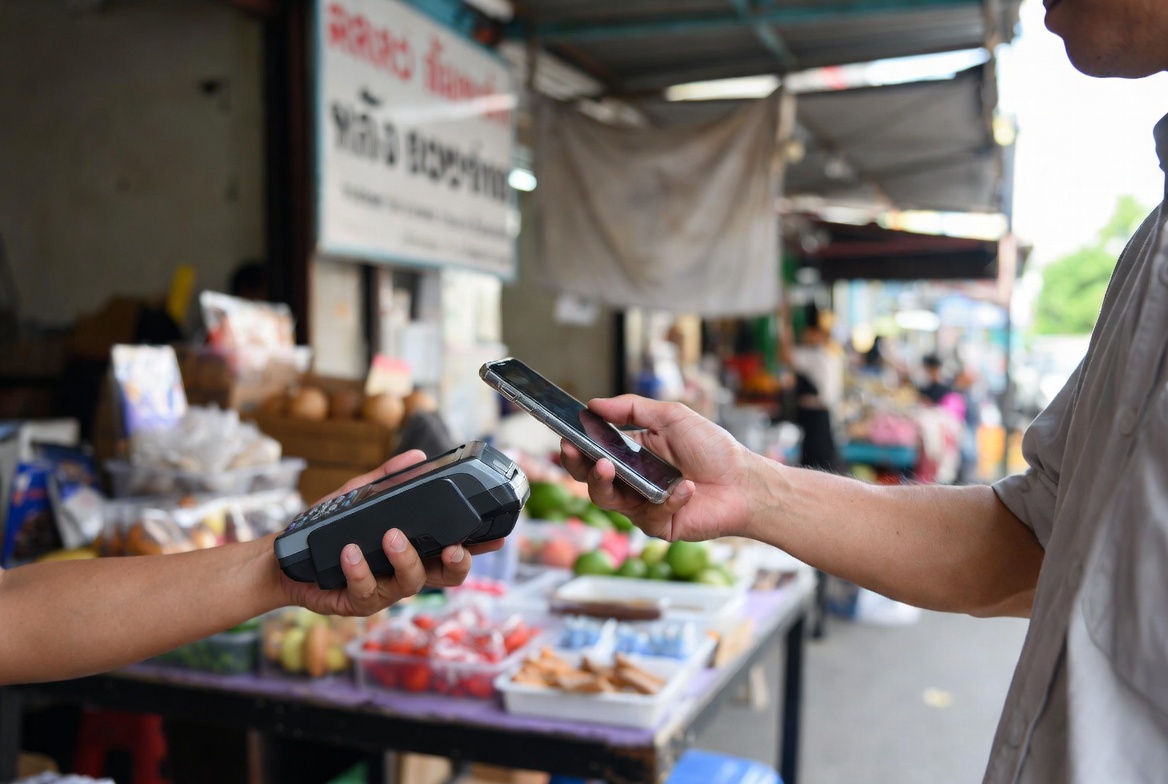
For consumers and businesses, a regulated baht stablecoin could enable near-instant settlement, lower-cost cross-border payments, and programmable money features such as automated payments that release only when conditions are met, according to Cryptonews. In a country where instant digital payment is already the norm through PromptPay, a stablecoin adds programmability, the ability to build rules and conditions directly into money, which opens up uses like automated escrow, supply chain settlement, and tokenized asset payments.
It is worth being clear about what it is not. According to Cryptonews, baht stablecoins issued by banks under the sandbox will be regulated digital assets but are not legal tender, and individuals will acquire them through participating banks rather than directly from the central bank. This sits alongside, but is separate from, the BOT's longer-running central bank digital currency work, the digital baht, which is a different project still in testing.
What this means for brands
For financial and fintech brands operating in Thailand, the baht stablecoin signals that programmable, blockchain-based money is moving into the regulated mainstream. The brands that understand the framework early, where stablecoins fit, what compliance they require, and how they connect to existing rails like PromptPay, will be positioned to build products and partnerships as the rules finalize.
FAQs
Q1: What is a baht stablecoin?
A1: A digital token pegged one-to-one to the Thai baht and backed by real baht reserves, designed for payments rather than speculation, according to the Bank of Thailand via Baker McKenzie and Bitget News.
Q2: When will the rules be ready?
A2: The BOT governor says the design has entered its final stage, with a public hearing in the coming months and formal regulations expected by 2026 or early 2027, according to Bitget News.
Q3: Who will issue baht stablecoins?
A3: Commercial banks are expected to be permitted to issue them under strict reserve and transparency requirements, with users acquiring them through participating banks, according to Cryptonews.
Q4: Is a baht stablecoin the same as the digital baht CBDC?
A4: No. The stablecoin is a separate, bank-issued regulated token. The digital baht is the central bank's own CBDC project, which remains in testing.
For brands entering Thailand, the baht stablecoin shows the country is bringing programmable money into the regulated mainstream, and that is exactly where SpinDepth helps brands show up.
Source:
Source 1: Bitget News, Bank of Thailand Says the Thai Baht Stablecoin Guideline Is in Its Final Stage, https://www.bitget.com/news/detail/12560605479908
Source 2: Baker McKenzie, Thailand Bridging Payments and Digital Assets Current Regulatory Developments, https://www.bakermckenzie.com/en/insight/publications/2026/01/thailand-bridging-payments-digital-assets-current-regulatory-developments
Source 3: Cryptonews, Thailand's Central Bank to Allow Banks to Issue Baht Stablecoins This Year, https://cryptonews.net/news/legal/33071538/
Source 4: Chambers and Partners, Fintech 2026 Thailand, https://practiceguides.chambers.com/practice-guides/fintech-2026/thailand/trends-and-developments
Source 5: Lexology, Thailand Digital asset regulatory round-up 2025, https://www.lexology.com/library/detail.aspx?g=a3817f0d-fa22-4594-98e7-bff1d3e22971