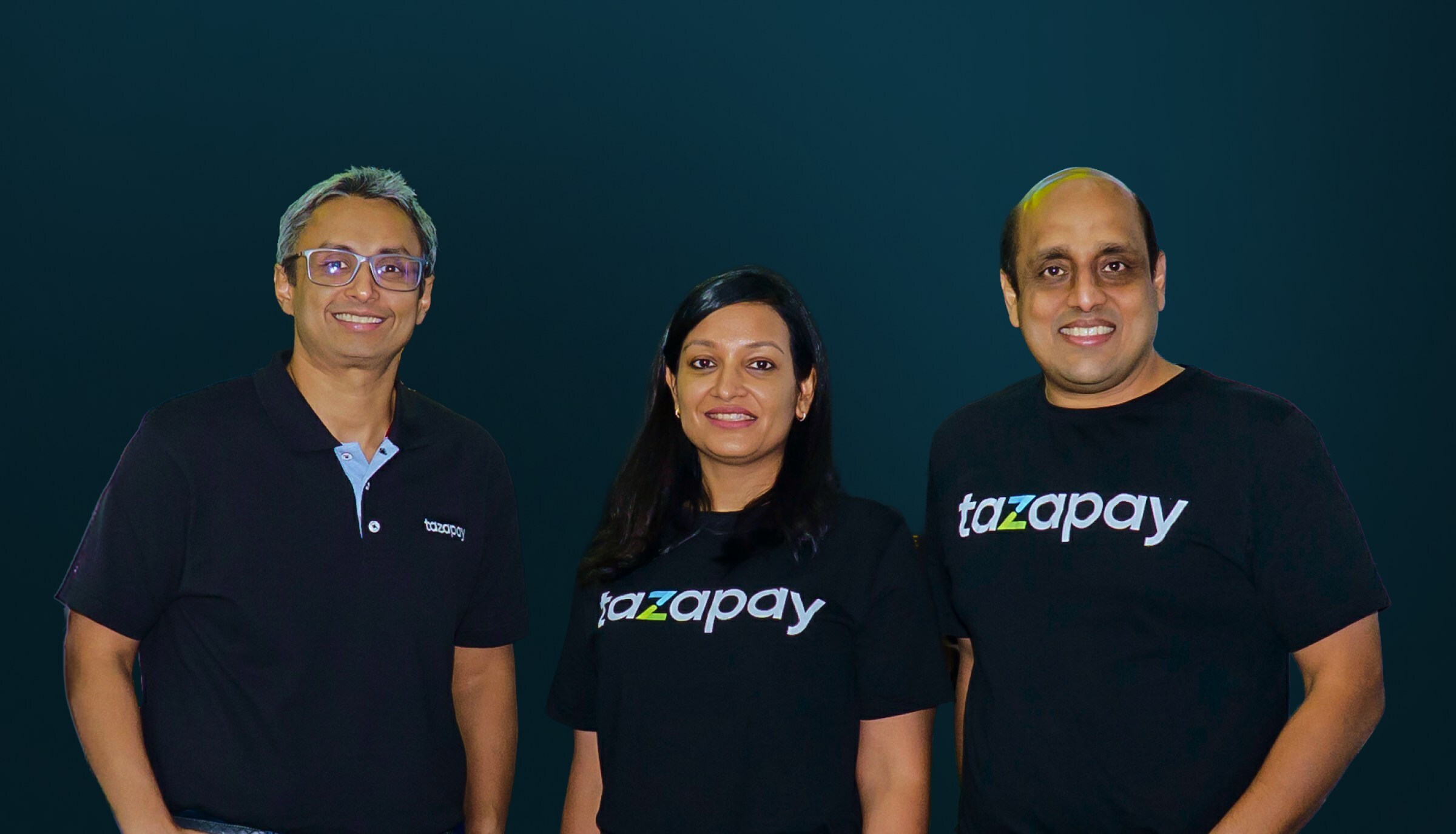
A Singapore Fintech Just Raised 36 Million Dollars to Let AI Agents Pay the Bill
Tazapay closed a 36 million dollar Series B led by Circle Ventures, with Coinbase Ventures and CMT Digital joining, to build agentic payment rails and stablecoin settlement across emerging markets. It is one of the clearest signals yet that AI agents paying for things is moving from idea to infrastructure.

A Singapore payments company is betting real money that, very soon, the thing paying your invoice will not be a person. It will be an AI agent. According to a March 2026 announcement and reporting by Fintech News Singapore, Tazapay (https://tazapay.com) closed a Series B extension led by Circle Ventures, bringing its total Series B to 36 million US dollars, with Coinbase Ventures and CMT Digital joining as new investors. The money is going toward two things that point straight at the future of money movement: agentic payment infrastructure and cross-border stablecoin settlement.
What Tazapay actually raised and from whom
According to PR Newswire and The Block, the round was an extension that took the Series B to 36 million US dollars in total, led by Circle Ventures, the venture arm tied to the issuer of the USDC stablecoin. New backers Coinbase Ventures and CMT Digital joined existing investors including Peak XV Partners, GMO Venture Partners, January Capital, and Ripple. That investor list matters. When the venture arms of Circle, Coinbase, and Ripple all sit on one cap table, the signal is that the smart money believes stablecoin-based payment infrastructure is becoming core financial plumbing, not a crypto side experiment.
Tazapay is not a consumer app. According to the company, it is regulated cross-border payment infrastructure that serves more than 1,000 enterprises and fintechs across 30 countries, with local collection and payout capability in over 70 markets. It holds licenses and registrations in Singapore, Canada, Australia, and the United States, with applications underway in the UAE, the EU, and Hong Kong. The company says it has doubled revenue for three consecutive years.
The 30 trillion dollar problem stablecoins are aimed at
The reason this matters for Southeast Asia is the cost and friction of moving money across borders. In an interview with Fintech News Network, Tazapay Chief Product Officer Aayush Singhania pointed to a stark figure: according to UN estimates he cited, moving 200 US dollars across borders still cost 6.2 percent in 2026. He also described roughly 30 trillion US dollars sitting idle in nostro and vostro accounts, the pre-funded bank accounts that exist purely to keep cross-border settlement moving. That is dead capital.
Stablecoins, Singhania argued, change that math because they can move across borders 24 hours a day, settle instantly and irreversibly, and crucially do not require pre-funding. For a region like Southeast Asia, where remittances and cross-border SME trade are enormous and traditional rails are slow and expensive, that is a meaningful shift. Tazapay's role, in its own framing, is to be the regulated fiat bridge that makes stablecoin settlement usable for ordinary businesses.
Why agentic payments is the bigger bet
The more forward-looking half of the raise is agentic payments. The idea is simple to state and hard to build: within a year or two, businesses may rely on AI agents to book travel, manage procurement, and handle routine B2B transactions. Singhania noted, citing a McKinsey study, that almost 60 percent of B2B payments still require manual intervention today. If agents take over that work, they will also need a way to settle the bill. As he put it to Fintech News Network, when agents start running these flows, they will need ways to pay, and that is where agentic payments come in.
Tazapay says it is building for both sides of that future at once, the acceptance side where merchants take payment from an agent, and the payer side where an agent pays on a business's behalf, all on top of licensed, compliant rails with a rules engine to govern what agents are allowed to do. This lands in the same moment that consumer platforms abroad have begun letting AI agents trade and transact, which tells you the direction the whole industry is moving.
When agents start running these flows, they will need ways to pay. That single sentence is the thesis behind a 36 million dollar bet.
What this means for brands and businesses in Southeast Asia
For any financial or fintech brand operating in Southeast Asia, the Tazapay raise is a marker of where the ground is shifting. Cross-border payments are moving toward stablecoin settlement, and the next layer of customers may not be human at all. The brands that understand both shifts early, and that build the trust and compliance credibility to operate in them, will be positioned for the next phase. The ones that treat stablecoins and AI agents as distant concepts risk waking up to find the infrastructure already built around them.
This is where SpinDepth helps. We help fintech and financial brands build genuine trust and market presence across Southeast Asia and APAC, exactly as the rails underneath payments are being rebuilt.
FAQs
Q1: How much did Tazapay raise and who led it?
A1: Tazapay closed a Series B extension led by Circle Ventures that brought its total Series B to 36 million US dollars, with Coinbase Ventures and CMT Digital joining as new investors, according to PR Newswire and Fintech News Singapore.
Q2: What is agentic payment infrastructure?
A2: It is payment rails and a rules engine designed to let AI agents make and accept payments autonomously on behalf of businesses, on top of licensed, compliant infrastructure, according to Tazapay.
Q3: Why do stablecoins matter for cross-border payments?
A3: Tazapay's CPO said stablecoins can move across borders 24/7, settle instantly, and do not require pre-funding, addressing the high cost of cross-border transfers and the trillions in idle capital tied up in correspondent banking, according to Fintech News Network.
Q4: Where does Tazapay operate?
A4: It serves more than 1,000 enterprises across 30 countries with payout capability in over 70 markets, holding licenses in Singapore, Canada, Australia, and the US, with applications in the UAE, EU, and Hong Kong, according to the company.
For brands entering Southeast Asia, the lesson is that payments are being rebuilt around stablecoins and AI agents, and the time to understand that shift is now, not after it is finished.
Source:
Source 1: PR Newswire, Tazapay Raises 36M in Total Series B Funding, https://www.prnewswire.com/apac/news-releases/tazapay-raises-36m-in-total-series-b-funding-to-scale-next-generation-payment-rails-globally-circle-ventures-leads-extension-302725966.html
Source 2: Fintech News Singapore, Tazapay Is Preparing for a World Where AI Agents Pay the Bill, https://fintechnews.sg/132703/ai/tazapay-agentic-payments-stablecoins/
Source 3: The Block, Circle Ventures leads Tazapay Series B extension, https://www.theblock.co/post/395263/circle-ventures-leads-tazapay-series-b-extension-bringing-the-round-to-36-million
Source 4: Tazapay, Series B Extension 2026 announcement, https://tazapay.com/blog/tazapay-series-b-extension-2026