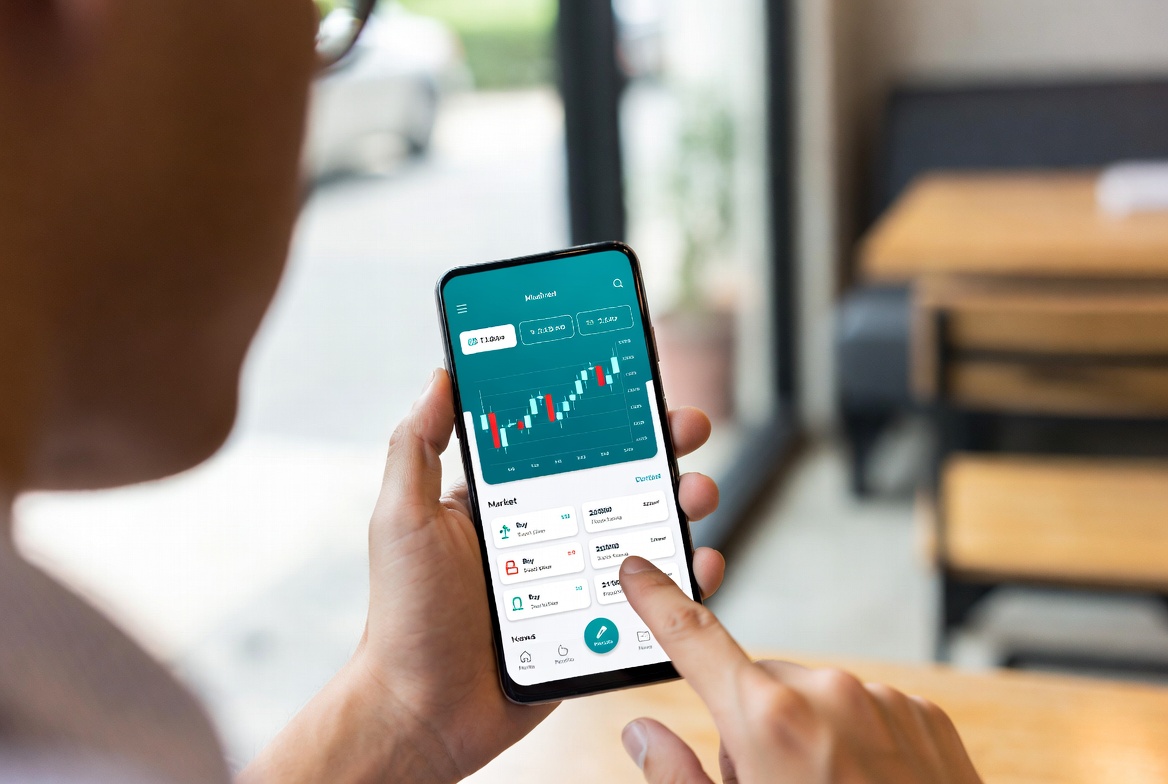
Mobile Trading Is Now the Primary Channel for Retail Forex and CFD Participation Across SEA
Speed and convenience are not luxuries for Southeast Asian retail traders in 2026. They are requirements. Mobile-first trading has moved from a feature to a structural market condition that defines how financial brands need to build presence, content, and trust.
The shift to mobile-first trading in Southeast Asia is not a trend that is still emerging. It has already occurred. Market analysis consistently identifies mobile trading as the primary access channel for retail forex and CFD participation across Thailand, Vietnam, Indonesia, Malaysia, and the Philippines. Apps that allow traders access to more than 100 technical indicators and various chart types have moved from premium offerings to baseline expectations. Speed and convenience are not luxuries. They are requirements that define the minimum viable product in the Southeast Asian retail trading market.
For financial brands, this structural shift to mobile trading has implications that go beyond platform development. It reshapes the content consumption patterns of the retail trading audience, the community dynamics that drive brand evaluation, the trust-building touchpoints that convert awareness into account openings, and the competitive benchmarks that brands are evaluated against. Understanding the mobile trading landscape in Southeast Asia in 2026 is not a technology question. It is a strategic market positioning question.
How Mobile Has Changed the Information Consumption Pattern
The retail forex and CFD trader in Southeast Asia who accesses markets primarily through a mobile app does not consume financial information the same way as a desktop trader consuming content through a browser. Mobile consumption is episodic rather than sustained. It happens in short bursts, between other activities, during commutes, in breaks from work, and in the evening hours that represent the peak activity window for retail traders in the region's time zones.
This episodic consumption pattern changes what kinds of content build brand relationships most effectively. Long-form written analysis, while valuable for establishing depth and expertise, is not the primary engagement format in a mobile-first environment. The formats that travel most effectively through mobile trading communities in Southeast Asia are short-form video analysis delivered through YouTube Shorts and TikTok, Telegram channel posts with chart screenshots and brief commentary, and Instagram or Facebook posts with clean visual summaries of market developments.
This does not mean that long-form content has no role. It means that the distribution architecture for building brand authority in a mobile-first trading market requires a layered approach where short-form content serves as the discovery and engagement layer, while long-form content serves as the depth and credibility layer that the most interested audience members access after initial engagement.
Financial brands that produce only long-form blog articles and email newsletters are building the credibility layer without the discovery layer. Financial brands that produce only short-form social content are generating awareness without the analytical depth that converts awareness into trust. The brands winning the mobile-first Southeast Asian retail trading market in 2026 are those that have built both layers and connected them deliberately.
The Telegram Ecosystem and Its Commercial Significance
In the Southeast Asian retail trading market, Telegram occupies a role that has no equivalent in Western financial markets. Trading communities in Thailand, Vietnam, Indonesia, and Malaysia that operate through Telegram channels and groups range in size from a few hundred members to tens of thousands, and the most respected channels are followed, discussed, and referenced across the entire retail trading community with a credibility that no paid advertising placement can match.
For financial brands, the Telegram ecosystem in Southeast Asian trading communities is not just a distribution channel. It is the primary peer validation environment where broker reputations are built and demolished. A broker that is consistently positively discussed in the major Thai or Vietnamese trading Telegram communities has a trust advantage that compounds over time and generates organic client acquisition that does not appear in performance advertising metrics. A broker that is negatively discussed in those same communities faces a reputational liability that will suppress conversion rates from all other acquisition channels simultaneously.
This dynamic makes Telegram community relationship management one of the most commercially significant activities available to financial brands in Southeast Asia, and one of the most systematically underinvested by international brokers who understand social media through a Western platform lens where Facebook, Instagram, and LinkedIn are the primary community channels.
The Mobile Payment Integration Advantage
The structural shift to mobile trading in Southeast Asia is inseparable from the structural maturation of mobile payment infrastructure across the region. Digital payment transactions are projected to exceed $1.5 trillion in the region in 2026. The Thai trader who uses PromptPay for every daily transaction, the Vietnamese trader using MoMo or ZaloPay, and the Indonesian trader using QRIS for merchant payments are all operating in a financial ecosystem where the friction between their digital wallet and a trading account deposit is minimal.
For financial brands, the integration of local payment methods is no longer a competitive advantage. It is a prerequisite. Any broker entering the Southeast Asian retail trading market in 2026 that does not support the major local payment methods for deposits and withdrawals is placing itself at a structural disadvantage from day one, because the mobile-native trading audience in this region has normalized instant digital payment and will not tolerate the friction of international wire transfers or credit card deposits that were acceptable five years ago.
The brands that have recognized this and built local payment integration as a foundational capability, rather than an afterthought, are capturing the transactional convenience that the mobile-first Southeast Asian trading audience expects. The brands that have not made this investment are losing conversion at exactly the moment when a potential client decides to act, the highest-value moment in the entire client acquisition funnel.