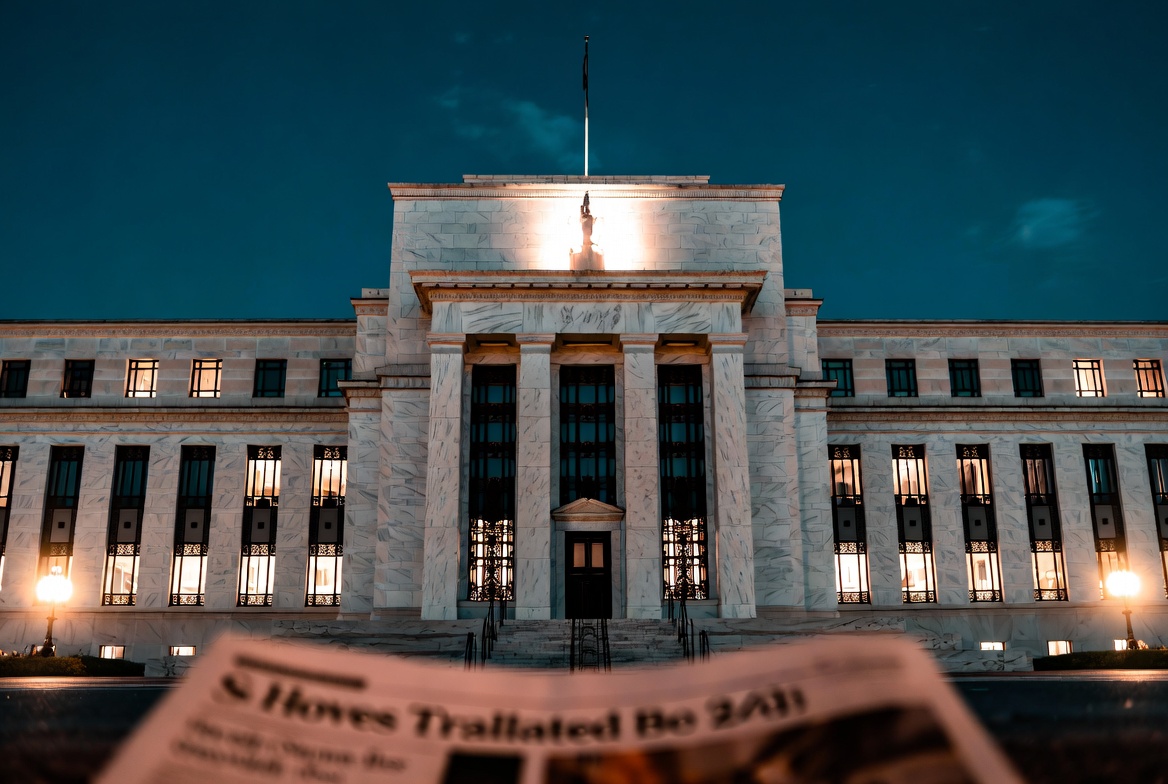
Kevin Warsh Just Told Congress He Made No Promises to Trump on Rate Cuts
Federal Reserve chief nominee Kevin Warsh stated on April 22, 2026 that he made no promises to Trump about cutting interest rates. The Fed nomination battle is reshaping dollar expectations and creating one of the most analytically significant central bank stories of 2026 for Southeast Asian forex traders.
On April 22, 2026, Kevin Warsh, the nominee to become the next Federal Reserve chair, testified before Congress and stated explicitly that he had made no promises to President Donald Trump about cutting interest rates. The statement was designed to reassure markets about the Fed's institutional independence at a moment when Trump has been publicly pressuring the central bank to reduce borrowing costs. Warsh told lawmakers that he had made no commitments and would act in accordance with what the data requires, prioritizing price stability.
For retail forex traders across Southeast Asia, this testimony matters in ways that extend well beyond US domestic monetary policy. The Federal Reserve's independence, or the perception of its independence, is one of the structural pillars of the US dollar's reserve currency status and its behavior against every currency pair that Southeast Asian traders actively manage. When that independence is questioned, threatened, or credibly defended, it produces specific and commercially relevant movements in the dollar index and in the dollar pairs that define the daily trading environment for the most active segment of the Southeast Asian retail market.
The Triangle of Forces Shaping the Dollar Right Now
The US dollar's behavior in the week of April 21 to 27, 2026 is being shaped by three simultaneous forces that are pulling in different directions and creating the kind of complex, analytically rich environment that rewards informed positioning over reactive trading.
The first force is the Fed's higher-for-longer rate posture. The Reuters poll published April 22 confirmed that 56 of 103 surveyed economists expect rates to hold through September 2026, with nearly a third expecting no cuts at all this year. This rate differential, where the US holds at 3.50 to 3.75 percent while the European Central Bank is facing pressure to cut in response to the German growth collapse to 0.5 percent, creates mechanical dollar support against the euro that is directly visible in EUR/USD trading.
The second force is political uncertainty about the Fed's future direction. Trump's public pressure on the current Fed leadership and his nomination of Warsh as the next chair creates a specific kind of dollar uncertainty that is different from conventional monetary policy risk. The question being priced by currency markets is not just what the Fed will do under current leadership, but what it will do under the next leader, and whether that leader's independence will be credibly maintained in the face of presidential pressure in a high-inflation, high-stakes political environment.
The third force is gold's behavior as the dollar alternative safe haven. Gold at $4,748 this week, rising on ceasefire extension news, reflects a market that is buying gold not just as an inflation hedge but as a dollar alternative, a choice that reflects underlying uncertainty about the long-term trajectory of US monetary policy that Warsh's testimony was specifically designed to address.
The Southeast Asian Currency Implications
For the Southeast Asian retail forex audience, the Fed nomination dynamic creates a specific analytical layer on top of the already complex environment of oil market disruption, ceasefire diplomacy, and regional economic stress. The currencies of Southeast Asian economies are priced daily against the US dollar, and the dollar's behavior against the euro, yen, and other major currencies creates the global risk sentiment backdrop within which ASEAN currency pairs move.
A dollar that is supported by rate differentials but undermined by political independence concerns is a dollar that is less predictable in its day-to-day behavior than a dollar driven purely by rate fundamentals. The asymmetric risk profile this creates, where dollar weakness is possible on independence concerns and dollar strength is possible on inflation and rate data, makes the current environment one of the most analytically demanding but also most commercially rich forex trading environments in recent years.
For retail traders in Thailand, Vietnam, Indonesia, and Malaysia who are managing positions in USD pairs, this complexity is both a challenge and an opportunity. The challenge is that conventional interest rate differential analysis is insufficient on its own to navigate the current dollar market. The opportunity is that traders with the analytical framework to process both the rate differential and the political independence dimension simultaneously are positioned to identify moves that pure rate-differential traders will miss.
For financial brands serving this audience, the Warsh testimony and the Fed nomination battle it represents is exactly the kind of institutional, analytically rich market development that distinguishes sophisticated content from generic market commentary. The brand that explains in Thai, Vietnamese, and Bahasa Indonesia why Kevin Warsh telling Congress he made no promises to Trump matters for the baht, dong, and rupiah is demonstrating a level of market understanding that the increasingly professional Southeast Asian retail trading audience can evaluate and will reward.