Kevin Warsh Is Now Running the Federal Reserve. The Dollar Equation Has Changed.
Warsh was sworn in at the White House on May 22 in the most divisive Fed confirmation in history. Trump said rates will fall very quickly. Warsh has made no such promise. The June 16 meeting is his first vote. For Southeast Asian forex traders, this is the most important central bank transition since 2018.
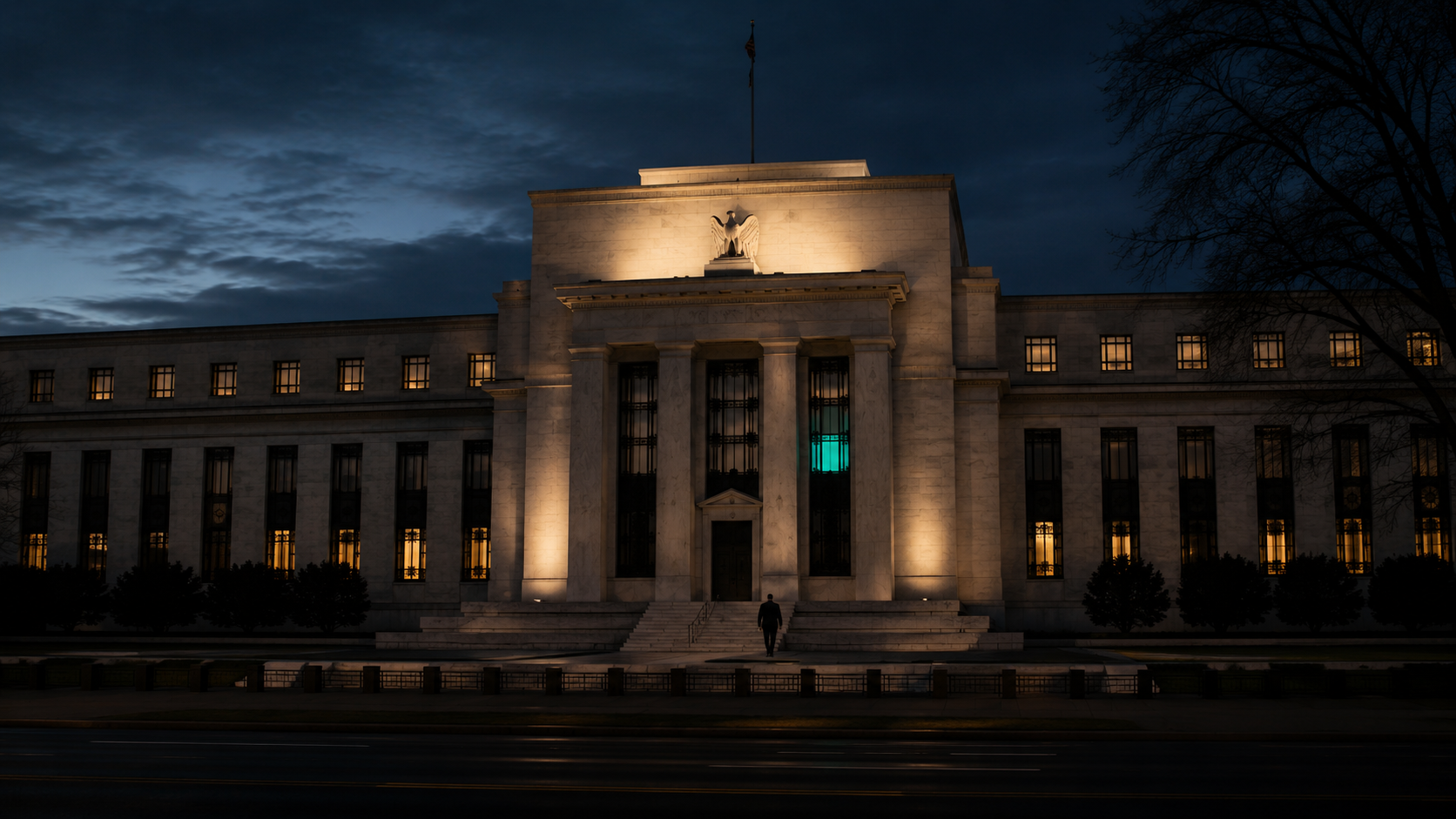
Kevin Warsh was sworn in as the 17th chair of the Federal Reserve at a White House ceremony on May 22, 2026. He was the first Fed chair to be sworn in at the White House since Alan Greenspan in 1987. The Senate had confirmed him eight days earlier in a 54-45 vote, the most divisive confirmation in the modern era of the central bank. Trump said at the swearing-in that he wants Warsh to be totally independent, then said later the same day that interest rates will be coming down very quickly. Warsh has said he made no promises on rate cuts to the president, that he would not set policy based on the president's views, and that he intends to lead a reform-oriented Federal Reserve. His first meeting as chair is June 16 to 17, 2026. The Fed's benchmark rate is currently 3.5 to 3.75 percent.
For retail forex traders across Southeast Asia, this is not a US domestic political story with incidental market implications. It is the most consequential central bank leadership transition since Jerome Powell replaced Janet Yellen in 2018, and it changes the analytical framework for every dollar pair in every Southeast Asian trading session from now until at least the end of 2026. The dollar's direction, the ASEAN currency pairs that move against it, the gold market's safe-haven positioning relative to dollar strength, and the rate differential dynamics that drive the carry trade across the region are all now shaped by a chairman who has been in office for eight days, whose policy preferences are being processed by a 12-person committee that includes multiple members who dissented at the last meeting, and whose first independent decision arrives on June 17.
What Warsh Has Said and What It Actually Means
The analytical challenge with Kevin Warsh as Fed chair is that his public record contains genuine internal tensions that markets are still working to resolve. Before the Iran war, in a CNBC interview in late 2025, Warsh argued that AI-driven productivity gains would push down inflation and create the conditions for rate cuts. He viewed tariffs as one-time price drivers rather than sustained inflationary pressures. That was the framework he brought into his nomination. The Iran war changed the inflation calculus materially. Energy prices, even after May's 19 percent Brent decline, remain significantly above pre-war levels. The structural inflation from supply chain disruption and energy cost transmission is not a one-time event. It is a sustained headwind that Warsh's pre-war AI productivity thesis did not account for.
During his April 21 confirmation hearing, Warsh acknowledged this shift. He said the US economy is still dealing with ripples from a pandemic-driven spike in inflation and that the Fed needs a different framework for assessing it. He described his intended approach as tighter inflation discipline and more narrowly focused central bank communication. This is not the language of a chair who is preparing to cut rates quickly. Chase's investment strategists, in a note published following the confirmation, stated that they expect the Fed to keep interest rates steady through the rest of 2026 as rising prices and volatile energy costs fuel ongoing economic uncertainty.
The June 16 meeting is Warsh's first opportunity to either confirm or complicate these market expectations. The base case, rates held at 3.5 to 3.75 percent, is widely priced. What is not yet fully resolved is the language Warsh will use in the post-meeting statement and press conference, the composition of any dissents within the committee, and the signals he sends about the conditions under which cuts could begin. Each of these has direct implications for USD/THB, USD/VND, USD/IDR, and the other ASEAN dollar pairs that Southeast Asian retail forex traders are most actively managing.
The Committee Problem That Limits Warsh's Room
A Federal Reserve chair has one vote in a 12-person committee. The significance of this structural constraint cannot be overstated for understanding what the Warsh era actually means for monetary policy in 2026. The April 29 meeting, Powell's last, produced four dissents: one from Governor Stephen Miran in favor of a cut, and three from regional Fed presidents who wanted the statement to lean hawkish rather than include an easing bias. This was the most fractious Fed vote since October 1992.
The committee's revealed preference at that meeting was not toward rate cuts. Three of the four dissenters were leaning against cuts, wanting the Fed to communicate a neutral stance where hikes are as likely as cuts given current conditions. For Warsh to deliver the rate cuts that Trump has claimed will come very quickly, he would need to persuade a majority of a committee whose most vocal members have just signaled that they are more concerned about inflation persistence than growth support. That persuasion process cannot happen through press conferences and statements alone. It happens through economic data that changes the inflation trajectory, or through direct engagement with committee members over months of meetings.
The Council on Foreign Relations analysis published May 26 noted that Warsh's confirmation closes an unusually turbulent chapter in the institution's recent history, but flagged that the structural constraints on rapid policy change remain fully intact. Jerome Powell, who chose to remain on the Board of Governors rather than resign, will be present at the June 16 meeting as a voting member. The continuity of institutional knowledge and the persistence of the inflation constraint mean the Warsh era's opening chapter is likely to be more cautious than either Trump's public statements or market pricing for aggressive cuts would suggest.
The Southeast Asian Dollar Pair Implications
For Southeast Asian retail forex traders, the Warsh era creates a specific and analytically tractable set of positioning considerations across the dollar pairs they most actively trade. The overarching framework is one of dollar uncertainty rather than dollar direction. The Powell era's higher-for-longer posture was predictable in its logic if not in its duration. The Warsh era's policy direction depends on the interaction of inflation data, the Iran war energy cost resolution timeline, the committee's internal dynamics, and Warsh's own interpretation of his reform-oriented mandate, none of which is yet resolved.
- USD/THB: The Thai baht has been under sustained pressure from energy import costs throughout the Iran war. Brent's May decline to $92 has provided partial relief, but a Warsh Fed that holds rates through 2026 maintains the interest rate differential that creates structural dollar support against the baht. A cut at June or September would narrow that differential and provide additional baht support beyond the oil price relief.
- USD/VND: Vietnam's FTSE Emerging Market reclassification in September 2026 is the dominant structural factor for the dong in the second half of the year. The Warsh rate path matters primarily as a backdrop for the institutional capital flows that will accompany the FTSE inclusion. A hold-through-2026 scenario does not prevent those flows but mildly increases the dollar cost of dong-denominated positions for foreign investors.
- USD/IDR: Bank Indonesia faces the most complex balancing act in ASEAN, managing inflation, growth, and a currency that is sensitive to global risk sentiment shifts. A Warsh Fed that holds rates while signaling eventual cuts is modestly positive for the rupiah compared to the higher-for-longer Powell posture, because it reduces the long-term interest rate differential pressure.
- USD/MYR: The ringgit has been the regional outperformer on Malaysia's semiconductor supply chain positioning. The Warsh era does not change that structural story, but the dollar's direction under a reform-oriented Fed that is pressing for institutional independence against political pressure creates an additional volatility layer for MYR positioning that did not exist under Powell's more predictable communication style.
The carry trade dimension compounds each of these pair-specific considerations. Japan intervened in yen markets on May 1 after dollar-yen breached 160.72, sending the pair to 155.5. The interest rate differential between the US at 3.5 to 3.75 percent and Japan at 0.5 to 0.75 percent remains the primary structural driver of yen weakness and carry trade activity. If the Warsh era produces even a modest signal of rate cuts beginning in late 2026, that differential narrows and the carry trade economics become less compelling, creating a potential yen strengthening dynamic that flows through to AUD/JPY, NZD/JPY, and the broader carry trade positions that Southeast Asian traders have been managing since the May 1 intervention.
The Iran War Inflation Constraint and Its June Relevance
The single most important variable in the Warsh Fed's June 16 decision is not the new chair's policy preferences. It is the inflation data that arrives between now and that meeting, and specifically whether the 19 percent Brent crude decline in May translates into a measurable moderation of energy-driven inflation in the US CPI and PCE data. If oil remains near $92 through the first week of June and consumer prices show a meaningful deceleration in the May data, Warsh has data to support a more dovish lean in the June statement without requiring an explicit rate cut. If oil reverses, as it would if the MOU collapses or Trump does not sign, the June meeting arrives with inflation moving in the wrong direction for any cut signal.
Fortune's analysis of the Warsh era noted that the argument for cutting is only getting more difficult to sell, with inflation not moving in the right direction and shorter-term Treasury yields also moving inconveniently for any dovish pivot. This captures the structural constraint precisely. The Warsh Fed cannot cut rates while inflation is elevated without undermining exactly the tighter inflation discipline and independent credibility that Warsh himself has described as the defining priorities of his chairmanship. The political pressure from Trump creates the optics problem: any cut that follows Trump's rates will fall very quickly statement will be read by markets as evidence of political influence, regardless of the economic justification. Warsh's first few months in the role are therefore constrained not just by inflation data but by the reputational requirement to demonstrate that the June meeting outcome is driven by economic analysis rather than presidential preference.
The Warsh era's opening chapter is constrained not just by inflation data but by the reputational requirement to prove the Fed is not taking orders.
What Financial Brands Need to Be Saying About This
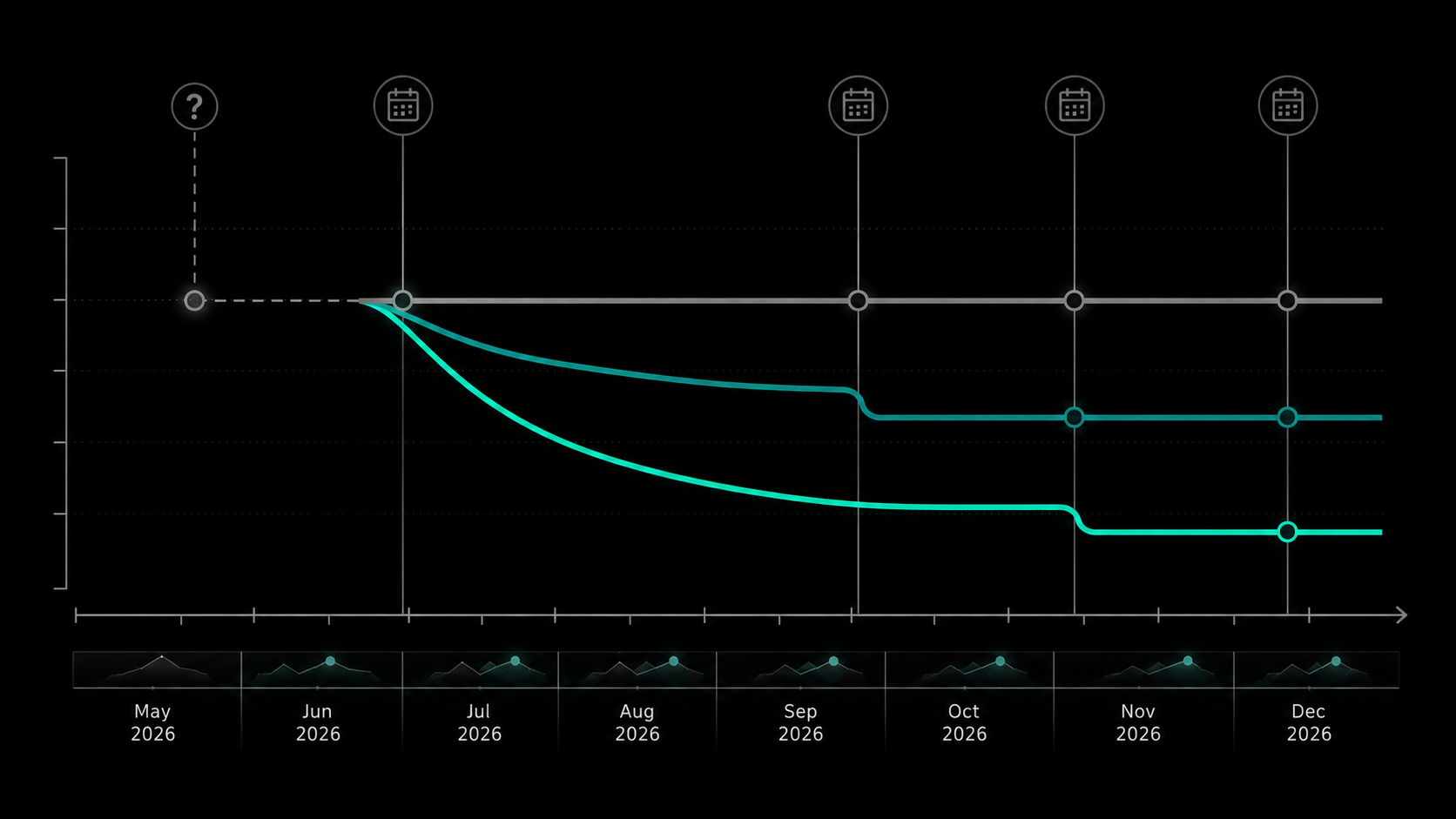
For financial brands serving Southeast Asian retail forex traders, the Warsh era creates a specific and sustained content opportunity that extends across the next six months of FOMC meetings. Every meeting from June onward is now a Warsh era event, meaning it carries both the conventional monetary policy information and the additional analytical layer of how Warsh is navigating his institutional independence positioning, his relationship with Trump's public rate cut expectations, and his own pre-stated priorities of inflation discipline and central bank reform.
The retail forex audience in Southeast Asia, which has been tracking the Powell-to-Warsh transition since the nomination was announced in early 2026, is not passive in its consumption of this story. It is actively building analytical frameworks for what the Warsh era means for the specific dollar pairs it trades. The financial brand that provides clear, locally relevant, language-appropriate content explaining the committee constraint problem, the June meeting dynamics, the Iran war inflation variable, and the specific implications for THB, VND, IDR, and MYR is providing something that no generic global financial news service produces at this level of regional specificity. That local specificity, delivered consistently through the first months of the Warsh era, is the content foundation that builds the most commercially durable trust with the sophisticated end of the Southeast Asian retail trading audience.