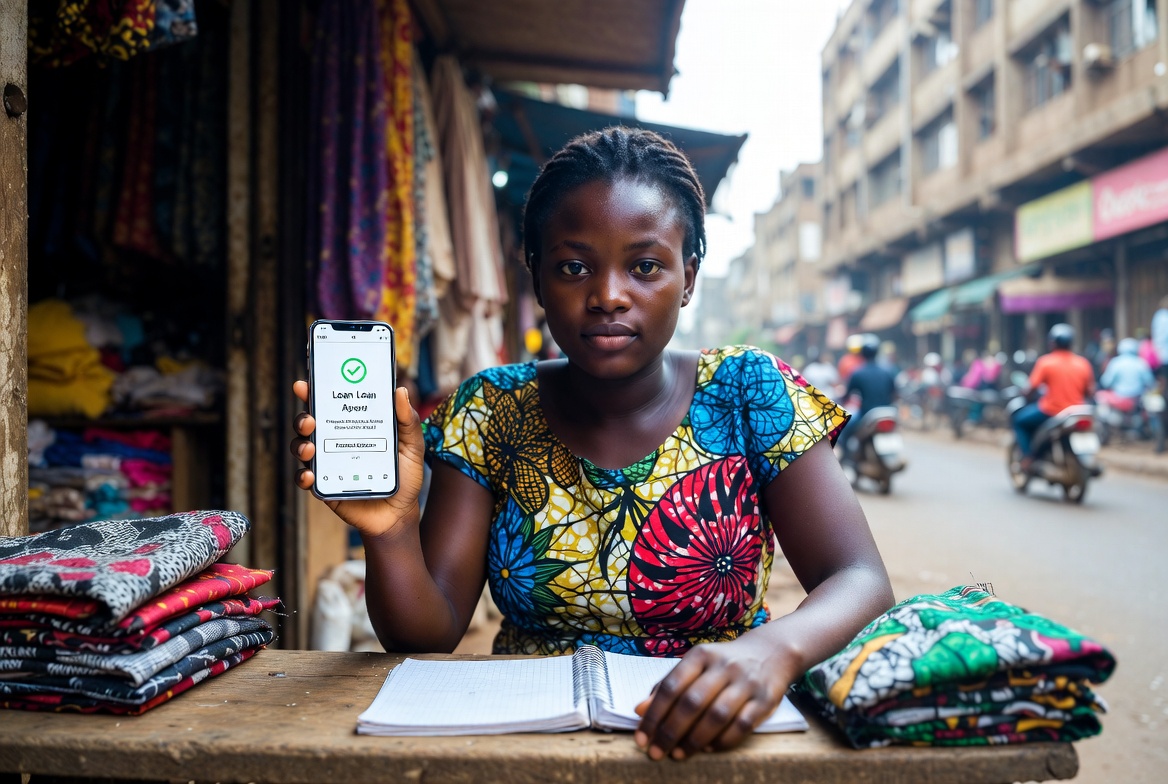
Financial Inclusion in 2026: How Mobile Money, AI Credit, and Embedded Finance Are Closing the Gap
The tools to achieve genuine financial inclusion are better than they have ever been. Here is how the 2026 technology and regulatory landscape is changing the economics of serving the unbanked.
There are approximately 1.4 billion unbanked adults in the world today. The number has been falling for a decade, driven by mobile money expansion in Sub-Saharan Africa and South Asia, smartphone penetration in emerging markets, and the development of fintech infrastructure that has made it commercially viable to serve customers that traditional banking has never been able to reach economically. But the pace of progress is insufficient relative to the opportunity and the need, and in 2026 the combination of AI-powered credit assessment, mobile-first digital banking infrastructure, and embedded finance distribution is creating a genuine acceleration.
The financial inclusion story of 2026 is not primarily a story about charitable intent or regulatory mandate - though both play important roles. It is a story about commercial economics: the cost of serving an unbanked customer has fallen dramatically, the data available to assess their creditworthiness has expanded significantly, and the distribution channels available to reach them have multiplied. The market opportunity that was once commercially unviable has become commercially attractive, and the capital and talent flowing into it reflects that shift.
Alternative Credit Data and AI Underwriting
The fundamental barrier to credit access for the unbanked and underbanked has always been the credit bureau: the infrastructure for assessing creditworthiness that depends on prior formal credit history that people who have never had formal credit simply do not have. AI-powered credit assessment systems that use alternative data sources - mobile payment history, utility payment patterns, airtime recharge behaviour, e-commerce purchase history, and the behavioural signals embedded in smartphone usage - are changing this.
The results from deployments at scale in Africa, South Asia, and Latin America are compelling. AI credit models built on alternative data are demonstrating default prediction accuracy that rivals traditional credit bureau models for thin-file and no-file borrowers. The lenders deploying these models are serving customers that traditional credit would have rejected while maintaining portfolio performance metrics that are commercially sustainable.
The regulatory challenges for alternative data credit assessment are significant. The use of non-traditional data in credit decisions raises questions of fairness, explainability, and the potential for algorithmic discrimination that regulators in multiple jurisdictions are actively examining. The firms that navigate these regulatory challenges most effectively are those that build explainable models, conduct systematic bias testing, and engage proactively with regulators to demonstrate that alternative data credit assessment serves inclusion goals without introducing new forms of discrimination.
Mobile Money Maturation
Mobile money - the ability to store, send, and receive money through a mobile phone without a bank account - has been the most successful financial inclusion tool of the past decade. M-Pesa in Kenya, bKash in Bangladesh, GCash in the Philippines, and Wave in Francophone Africa have between them brought hundreds of millions of people into the formal financial system for the first time.
In 2026, the mobile money market is maturing in ways that are creating the next layer of financial inclusion. The savings, credit, and insurance products being built on top of mobile money infrastructure are extending the benefits of financial inclusion from payment access to the full range of financial services. A smallholder farmer in Kenya who uses M-Pesa can now access crop insurance, micro-loans tied to agricultural cycles, and savings products that earn interest - all through the same mobile interface.
The interoperability of mobile money systems is one of the most significant policy advances of 2025 and 2026. In markets where multiple mobile money providers have historically operated in separate silos, regulatory mandates for interoperability - requiring different providers' customers to be able to transact with each other - are dramatically expanding the utility of mobile money and accelerating adoption.
The Role of Remittances
Remittances - the money sent by migrants to their families in their home countries - represent one of the largest financial flows to developing economies and one of the most important financial services for low-income households. The global remittance market is approximately nine hundred billion dollars annually, but a significant fraction of this value is lost to transaction costs that fall disproportionately on the lowest-income senders and recipients.
The stablecoin-based remittance infrastructure that has developed over the past three years is dramatically reducing the cost of specific remittance corridors, particularly those connecting the US, Europe, and Gulf states with Latin America, Africa, and South Asia. For households where remittances represent a significant fraction of income, the difference between a seven percent transaction cost and a one percent transaction cost is material to financial wellbeing.
What Financial Firms Must Do Now
- Evaluate the financial inclusion commercial opportunity honestly: The financial inclusion market is not a charity sector with thin margins. At the right unit economics - which AI-powered infrastructure and digital distribution are increasingly enabling - serving financially excluded populations is commercially attractive. Firms that have dismissed this market based on the economics of ten years ago should re-evaluate.
- Develop alternative data credit capability: The ability to assess creditworthiness from non-traditional data sources is a capability that is valuable in emerging markets and increasingly valuable in developed markets for thin-file and young borrowers. Investment in this capability has dual-market application.
- Engage with the interoperability agenda: Mobile money and digital payment interoperability is both a regulatory agenda item and a commercial opportunity. Firms that engage proactively with interoperability standards and regulatory frameworks will be better positioned as interconnected payment ecosystems develop.
- Build for mobile-first architecture: In the markets where financial inclusion progress is most rapid, the dominant access device is a smartphone, not a desktop computer or a bank branch. Firms that design their products and processes for mobile-first access from the ground up will outperform those that adapt desktop-first products for mobile delivery.
Conclusion
Financial inclusion in 2026 is at a commercial and technological inflection point. The tools to serve the unbanked and underbanked have never been better, the economics have never been more attractive, and the policy environment in most emerging markets has never been more supportive. The firms that engage seriously with this market now will build durable positions in some of the fastest-growing financial services markets in the world. At SpinDepth, we help financial institutions and fintech operators navigate the strategic and narrative dimensions of financial inclusion. The conversation starts here.