
Every ASEAN Super App Is Now Running a Bank
Across ASEAN, the apps delivering groceries, rides, and social connections are now delivering credit, insurance, and banking. The financial relationship has moved to the platform, and distribution is the strategic prize.
The financial services layer in Southeast Asia is not migrating to apps. It has already arrived. Across ASEAN's six largest economies, platforms that began as ride-hailing services, e-commerce marketplaces, and messaging tools now offer lending, insurance, savings products, and payment infrastructure to tens of millions of users who will never interact with a traditional bank branch. According to a November 2025 survey conducted by HSBC, Google Cloud, and PCMI, digital payments through e-wallets and account-to-account systems now account for 58% of cashless transactions across Southeast Asia, overtaking credit cards by transaction value. The question for brand strategists and regional GMs entering this market is not whether embedded finance will reshape distribution. It is which platforms will hold the customer relationship when financial services become indistinguishable from the apps that deliver them.
ASEAN's Super Apps Are Now Financial Platforms
Southeast Asia's super app model has roots in the WeChat and Alipay precedents set in China, but the ASEAN iteration has followed a different structural logic. Where Chinese platforms scaled inside a single regulatory jurisdiction with strong state alignment, Grab, Gojek, and their counterparts have had to build financial products across six distinct regulatory environments simultaneously. The Asia Pacific embedded finance market reached an estimated $288.8 billion in 2025, growing at 9.1% annually, according to ResearchAndMarkets data. That figure encompasses the full vertical stack: payments, lending, insurance, banking, and wealth products delivered through non-financial platforms. Competitive intensity is rising precisely because distribution, not product design, has become the primary point of differentiation in this market.
Grab's financial services arm now operates across Singapore, Malaysia, Indonesia, the Philippines, Thailand, and Vietnam, offering micro-loans, motor insurance, and savings products within the same interface used to book a ride or order groceries. GoPay, embedded into Gojek's food delivery and ride-hailing flow, processes billions in transaction value annually across Indonesia. Standard Chartered's nexus platform is powering white-labeled banking infrastructure for ecosystem partners across Indonesia and other Southeast Asian markets, a signal that incumbent banks have accepted the distribution reality: the platform is where the customer is, and the product must follow. E-commerce players Lazada and Shopee have embedded BNPL and wallet features across the region, folding short-term credit into the checkout experience for consumers who often hold no credit card and have had no prior relationship with a licensed lender.
Why Embedded Credit Follows the Payments Layer
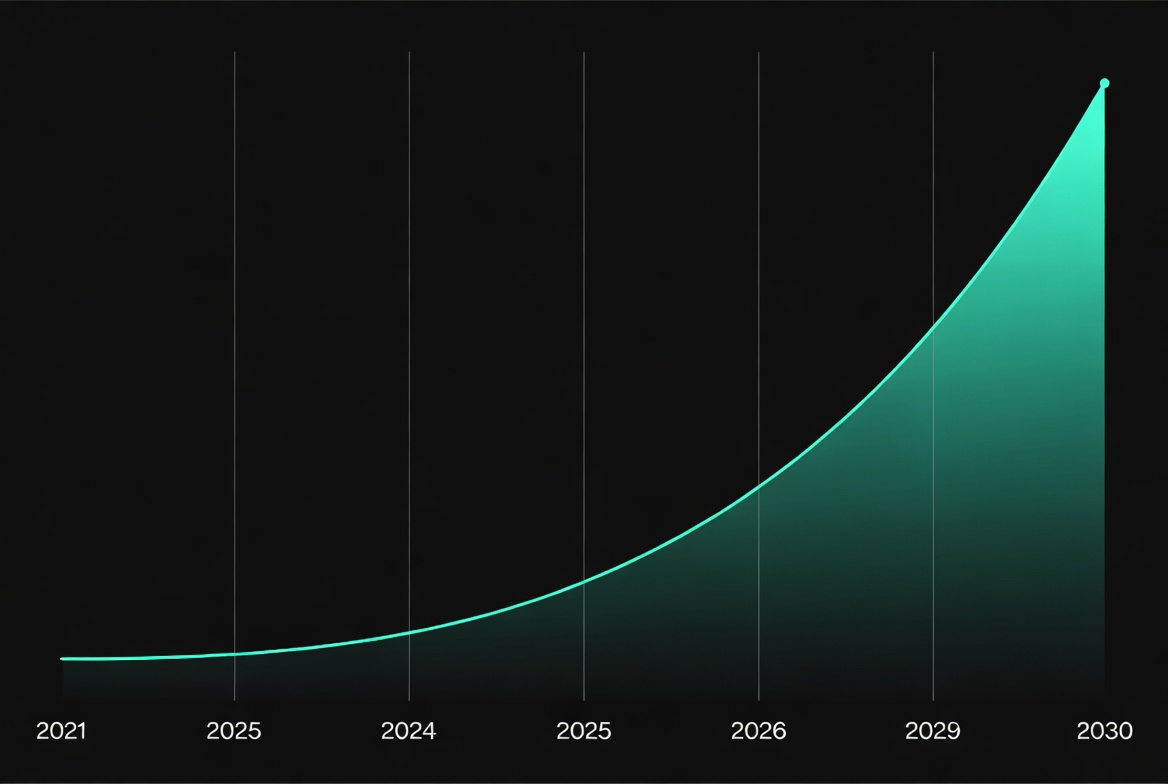
The embedded payments layer is the most mature vertical across ASEAN embedded finance, and its strategic significance is less about the payment itself than about what the payment creates. According to EY analysis, embedded payments represent roughly 47% of the APAC embedded finance market by value, and the transaction infrastructure they generate, the behavioral data, the trust relationship, the daily session time, is what makes credit viable at scale. Digital payments gross transaction value across ASEAN-10 reached $1.41 trillion in 2025 and is projected to reach between $2.4 and $2.6 trillion by 2030, according to ASEAN Exchanges. That volume is not purely a revenue figure. It is the transactional history that allows platforms to underwrite credit for SMEs too informal for commercial bank balance sheets but too large for microfinance programs.
Buy now, pay later has been the most visible expression of embedded lending across the region. The regional digital lending book reached $91 billion in 2025 and is projected to reach approximately $230 billion by 2030, driven by consumer BNPL volume and, increasingly, B2B embedded credit products. For platforms, the strategic value of lending extends well beyond margin. Lending generates stickiness that payments alone cannot produce: once a consumer or SME holds an active credit product within an ecosystem, switching costs rise materially. Cart abandonment falls. Session frequency rises. The platform becomes a financial relationship, not a transaction utility.
Indonesia's QRIS framework illustrates how standardized payment infrastructure accelerates embedded finance adoption at the base of the market. By eliminating processing fees below approximately $30 for micro-merchant transactions, QRIS has driven a permanent shift away from cash across informal retail and food service, creating a population of merchants with documented transaction histories for the first time. Those records are the precondition for embedded credit that traditional banks have never been positioned to offer at that segment. Similar QR code rollouts across Malaysia, Thailand, the Philippines, and Vietnam have produced structurally comparable outcomes, laying the data foundation for the next generation of embedded credit products in each market.
Open Banking Regulation Is Fragmenting, Not Harmonizing
The regulatory environment for embedded finance across ASEAN presents a structural tension that most market entry frameworks underestimate. Each of the six major economies has moved independently on open banking and embedded finance policy. Singapore has built the Finance-as-a-Service API Playbook and the government-backed SGFinDex data exchange platform. Indonesia's Standard National Open API for payments has achieved adoption across 16 banks. The Philippines enacted the Bangko Sentral ng Pilipinas Open Finance Framework. Malaysia introduced open finance policies through Bank Negara. The ASEAN Economic Community Strategic Plan 2026-2030 designates payment connectivity as a sovereign strategic priority, but cross-border data flow frameworks remain fragmented at the implementation level, and no convergence mechanism currently exists to bridge them.
For platform businesses and financial infrastructure providers, that fragmentation is an operational cost that compounds with market scope. Running compliant embedded finance products across Indonesia and Singapore simultaneously requires different reserve thresholds, different data residency arrangements, and different consumer protection disclosures. Regulatory divergence also entrenches competitive advantages for platforms that have already absorbed that compliance cost over several years of operation. Incoming brands that treat ASEAN as a unified market will discover that the compliance architecture alone can delay a multi-market rollout by 12 to 18 months. In a market where platform distribution is the primary acquisition mechanism, that delay is not a legal inconvenience. It is a structural disadvantage that marketing spend cannot compensate for once competitors have already established the embedded relationship.
- Singapore's Finance-as-a-Service API Playbook and SGFinDex enable API-first embedded finance product development under MAS oversight, the most permissive regulatory environment in the region for incoming infrastructure players.
- Indonesia's Standard National Open API has reached 16 banks but requires local data residency, materially increasing infrastructure costs for operators building multi-market embedded finance products.
- The Philippines' BSP Open Finance Framework mandates consumer data portability but does not yet interoperate with neighboring markets, limiting cross-border product design at the architecture level.
- Malaysia's Bank Negara open finance framework is still consolidating, with embedded insurance and embedded lending use cases scaling ahead of formal policy finalization.
- No single ASEAN open banking standard exists. The AEC Strategic Plan 2026-2030 targets integration but does not resolve current data flow fragmentation across national boundaries.
Southeast Asian Consumers Have Already Made Their Choice
Consumer appetite for embedded financial services across Southeast Asia is not emergent. It is a stated preference being acted on at scale. The November 2025 HSBC, Google Cloud, and PCMI consumer survey found that 84% of Southeast Asian respondents would consider switching to a bank or payment provider offering more personalized services. That is not a marginal preference. It is a competitive vulnerability for any brand delivering financial products through a generic, uncontextualized interface. The same survey placed integration with social media as the second most desired improvement for digital banking apps. One in three consumers want financial services inside messaging apps, and one in four want them embedded in gig platforms and everyday applications they already use daily.
The personalization expectation across Southeast Asia has a specific character that differs from Western markets. Across the region, 88% of consumers are already accustomed to personalization in financial services, a behavioral pattern that originated in e-commerce and has since migrated into payments and banking. A financial product embedded in a ride-hailing or food delivery platform is evaluated not only on its functional attributes, whether the credit limit is sufficient or the insurance payout arrives promptly, but on whether it surfaces at the right moment in the customer journey, in the right language, with the right contextual framing. Meeting that standard requires both data infrastructure and product design discipline that most traditional financial institutions have not built organically, and cannot acquire quickly through surface-level platform partnerships.
The platform is where the customer is, and the product must follow.

B2B Embedded Finance Is the Underpriced Opportunity
The consumer-facing narrative around embedded finance in ASEAN, super apps, BNPL at checkout, GoPay within the ride-hailing flow, has drawn disproportionate strategic attention and left a structural opportunity underexamined. B2B embedded finance, specifically the integration of credit, payment, and insurance products into the procurement, logistics, and ERP software that SMEs use daily, is scaling rapidly across Indonesia, Vietnam, and the Philippines. Platforms like Aspire in Singapore and Validus Capital in Vietnam are embedding working capital and credit products directly into supply chain and procurement workflows, addressing a financing gap that traditional banks have consistently been unable to serve profitably at that segment size.
Validus Capital's integration with Foodpanda, providing embedded financing directly to restaurant and food vendor partners within the platform's existing relationship, is an operational illustration of what B2B embedded finance looks like at the platform-SME interface. The logic is structurally clear: the platform already holds the transaction history, the merchant relationship, and the operational context required to make a lending decision that no external bank could make efficiently at that scale. The financial product is not being added to a distribution channel. It is being built into the working relationship between platform and merchant. The EY analysis of ASEAN embedded finance underscores that the SME embedded opportunity represents a multi-hundred-billion-dollar unlock across the region, with the persistent SME credit access gap functioning as the structural demand driver.
Investment technology tracked this B2B momentum in real time in 2025. Investment tech matched payments for transaction volume in ASEAN fintech deals during the first nine months of the year, capturing 21% of all regional transactions and expanding its funding share to 11% of total ASEAN fintech investment, up from 4% in 2024, according to ASEAN Exchanges data. That reallocation is not accidental. Capital is following the B2B embedded opportunity with growing precision, recognizing that the SME financing gap in Southeast Asia represents a more durable structural thesis than the consumer BNPL volumes that dominated earlier investment cycles.
What This Means for Operators
The embedded finance shift in ASEAN is not a technology story. It is a distribution story, and distribution stories are decided by whoever controls the customer relationship at the moment of financial need. For brands entering or repositioning across this market, the calculus is specific: the platform partnerships chosen will determine customer acquisition architecture for the next decade, the regulatory jurisdictions prioritized will define the cost base, and the consumer data infrastructure built or accessed through partnerships will determine whether personalization can be delivered at the standard that 88% of Southeast Asian consumers already treat as a baseline expectation. The market intelligence available through SpinDepth's APAC desk maps these structural dynamics across each of the six major ASEAN markets for operators refining their entry brief. In a region where the app has become the bank, the most consequential positioning decision is not what your product does. It is where your customer encounters it for the first time.
Speak with the SpinDepth desk