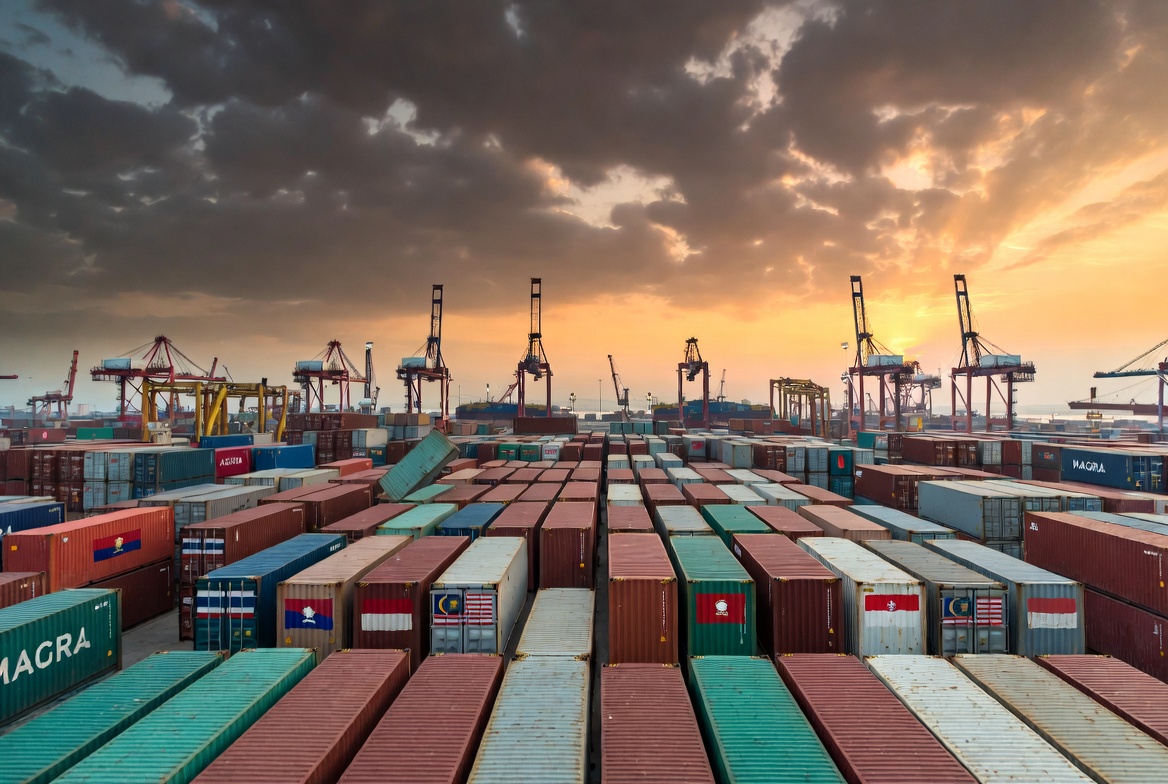
ASEAN Exports Jumped 14 Percent as the US-China Trade War Reshuffled the Global Supply Chain
McKinsey's 2026 global trade report confirms ASEAN exports surged nearly 14 percent as Vietnam, Thailand, and Malaysia absorbed supply chains displaced from China. The tariff era did not hurt Southeast Asia. It repositioned it as the primary beneficiary of the biggest supply chain reshuffling in a generation.
When the Trump administration imposed reciprocal tariffs on goods from more than 50 countries beginning in April 2025, the conventional concern among financial market analysts was that Southeast Asian economies would be caught in the crossfire of US-China trade conflict and suffer collateral damage as global trade volumes contracted. The data from 2025 and the first quarter of 2026 tells a categorically different story.
McKinsey Global Institute's 2026 update on the geometry of global trade, published in March 2026, provides the most comprehensive analysis of what actually happened. US-China trade fell by approximately 30 percent, with roughly $130 billion in Chinese exports to the US evaporating. The US replaced about two-thirds of that gap with imports from other sellers. And the single economy group that captured the largest share of that redirected demand was ASEAN. Vietnam, Thailand, and Malaysia absorbed supply chains displaced from China and rerouted finished goods, particularly consumer electronics, toward US buyers. ASEAN countries' exports jumped nearly 14 percent as a direct consequence.
This is not a marginal adjustment. A 14 percent jump in exports for the combined ASEAN bloc, occurring simultaneously with a 30 percent decline in US-China trade, represents one of the largest and most rapid supply chain redistributions in modern trade history. It confirms a structural repositioning of Southeast Asia within the global economy that has been building since the first Trump trade conflict of 2018 to 2020 but has now accelerated to a pace and scale that makes it a durable feature of the global trade landscape rather than a temporary adjustment.
The Supreme Court Ruling and What It Changes for ASEAN
The US Supreme Court's February 20, 2026 ruling that the IEEPA does not authorize tariffs struck down the legal basis for the broad Liberation Day tariffs that had applied to ASEAN economies at rates between 19 and 20 percent. Following the ruling, Trump responded by imposing a 10 percent global tariff under Section 122 for 150 days, set to expire around July 24, 2026. The US average effective tariff rate, which had peaked at approximately 27 percent in April 2025 and settled at around 15 percent by end of 2025, stood at 11.8 percent in April 2026.
For ASEAN exporters, the reduction from 19 to 20 percent ASEAN-specific tariffs to the current 10 percent Section 122 baseline represents a meaningful improvement in competitiveness versus the 2025 peak, but the structural supply chain advantage that ASEAN has built during the tariff era does not depend primarily on tariff rates. It depends on the relocation of manufacturing capacity, the establishment of supplier networks, the development of logistics infrastructure, and the creation of buyer-seller relationships that take years to build and do not reverse quickly when tariff rates shift.
Vietnam's Role as the Primary Supply Chain Beneficiary
Within ASEAN, Vietnam has been the most dramatic beneficiary of the China-US supply chain displacement. The country went from a relatively minor US trade partner to one of its most significant suppliers of consumer electronics, semiconductors, and manufactured goods in a period of five years. It is now one of the primary chip suppliers to the United States, a position that carries both economic opportunity and the specific vulnerability that has made Vietnam's exposure to US tariff policy more acute than most other ASEAN economies.
The FTSE Emerging Market reclassification that takes effect in September 2026, combined with the foreign investment hurdle removal reported in early April, positions Vietnam to capture a second wave of structural economic development benefit on top of the trade flow gains it has already realized. The institutional capital that will flow into Vietnamese financial markets following the FTSE reclassification will deepen the market infrastructure, increase the sophistication of the domestic financial services industry, and expand the retail investment and trading audience that financial brands are targeting.
For financial brands in Southeast Asia, the McKinsey 14 percent export growth figure is not just an economic data point. It is a confidence signal about the fundamental health and trajectory of the markets they are operating in. Financial brands building authority in Vietnam, Thailand, and Malaysia are building in economies that the data shows are structural winners of the global economic realignment, not victims of it. That structural tailwind makes the brand investment case more compelling and the expected return on market authority investment more favorable than building in markets that are on the losing side of the same dynamics.
The EU Double Squeeze as the Instructive Contrast
The McKinsey report's characterization of the European Union as facing a double squeeze provides the sharpest available contrast to ASEAN's structural positioning. The EU's trade deficit with China has widened, as imports have risen and exports have fallen. EU car exports to the US fell 17 percent while shipments to China dropped more than 30 percent in 2025. Chinese electric vehicles flooded Europe, rising by approximately 50 percent to more than 800,000 vehicles. Germany imported more cars from China than it exported there for the first time in its industrial history.
This EU double squeeze is the structural mirror image of ASEAN's 14 percent export gain. The same global trade reshuffling that lifted ASEAN is simultaneously squeezing European industrial economies. The euro's weakness on April 23, driven by Germany's growth forecast being cut from 1.0 percent to 0.5 percent, is the currency market expression of this structural squeeze.
For Southeast Asian forex traders who trade EUR/USD, EUR/JPY, or EUR/AUD, understanding this structural economic divergence between ASEAN and Europe is the analytical foundation for understanding why the current directional pressures on these pairs have the character they do. The euro is not just facing a cyclical headwind from energy costs. It is facing a structural competitive challenge from Asian manufacturing that the McKinsey data makes explicit.